How Gmail Loads Images (And Why It Matters for Email Tracking)
Last updated:
Short Answer: Gmail loads images through Google proxy servers instead of retrieving them directly from the sender’s server. This design improves security and privacy but also changes how email tracking signals appear.
Quick Summary:
- Gmail loads images through Google proxy servers.
- The proxy protects users from malicious image content.
- Image proxy caching affects email open detection.
- Email tracking systems detect opens when images are retrieved.
How Gmail loads images:
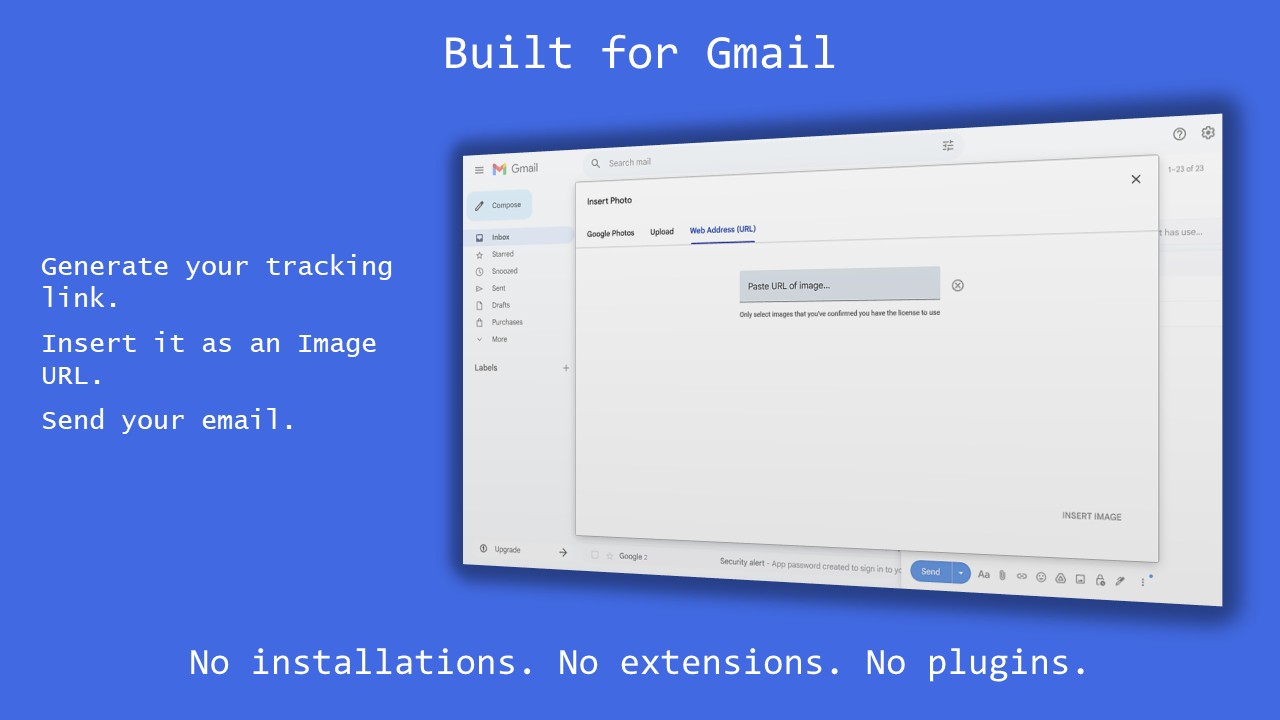
- The email message includes a remote image.
- Gmail requests the image through Google proxy servers.
- The proxy retrieves the image from the original server.
- The image is delivered to the Gmail interface.
Why Gmail Uses Image Proxy Servers
Gmail introduced image proxy servers to improve email security and privacy. Instead of loading images directly from the sender’s server, Gmail retrieves images through Google infrastructure.
This prevents senders from automatically collecting information such as the recipient’s IP address or device details when the email loads.
Because of this behavior, Gmail acts as an intermediary between the sender and the recipient.
How Gmail Image Proxy Affects Email Tracking
Email tracking systems rely on image loading events to detect when a message is opened. When Gmail loads a tracking image through its proxy servers, the request may appear differently than a direct image load.
For example, Gmail may cache images or route requests through proxy infrastructure, which can influence how open signals are recorded.
For a deeper explanation, see how Gmail image proxy affects email tracking.
When Gmail Blocks Images
In most cases Gmail loads images automatically. However, images may be blocked if Gmail identifies a potential security risk or if the user disables image loading.
If images are blocked, Gmail may display a message such as “Display images below.”
For more details see why Gmail blocks images.
Why Image Loading Matters for Email Tracking
Email tracking systems rely on images to confirm email opens. When the image loads, the server receives a request that indicates the message was viewed.
Because Gmail retrieves images through proxy servers, tracking systems must interpret open events carefully.
For a broader explanation see the complete Gmail email tracking guide.
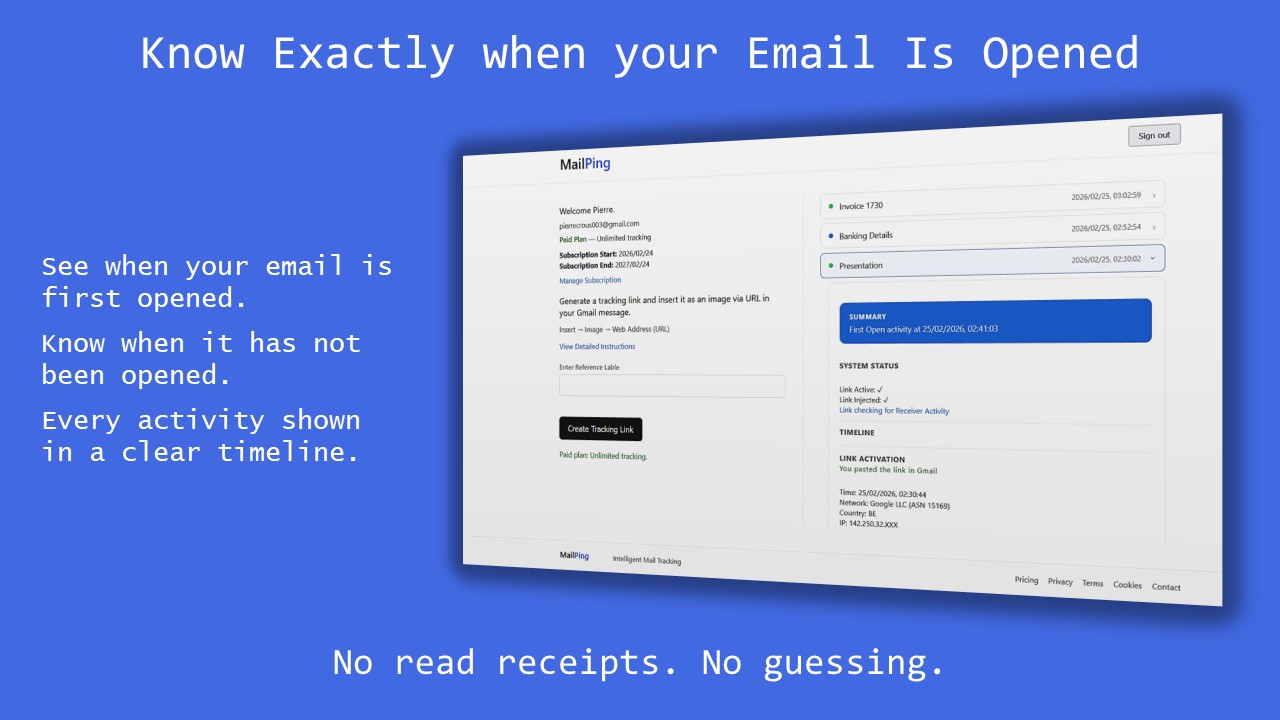
Track the first real open — no fake signals, no inflated metrics.
Start Tracking FreeFrequently Asked Questions
Does Gmail load images automatically?
Yes. Gmail typically loads images automatically through its proxy servers unless blocked for security reasons or disabled by the user.
Why does Gmail use proxy servers for images?
Proxy servers protect users from malicious images and prevent senders from collecting direct network information such as IP addresses.
Can Gmail image proxy affect email tracking?
Yes. Proxy caching and routing can influence how tracking systems record open events.
Does Gmail cache images?
Yes. Gmail may cache images after retrieving them, which can affect how repeat opens are recorded.
Can Gmail block images completely?
Yes. Gmail may block images if a message is flagged as suspicious or if the user disables automatic image loading.
Does Gmail proxy change the open location?
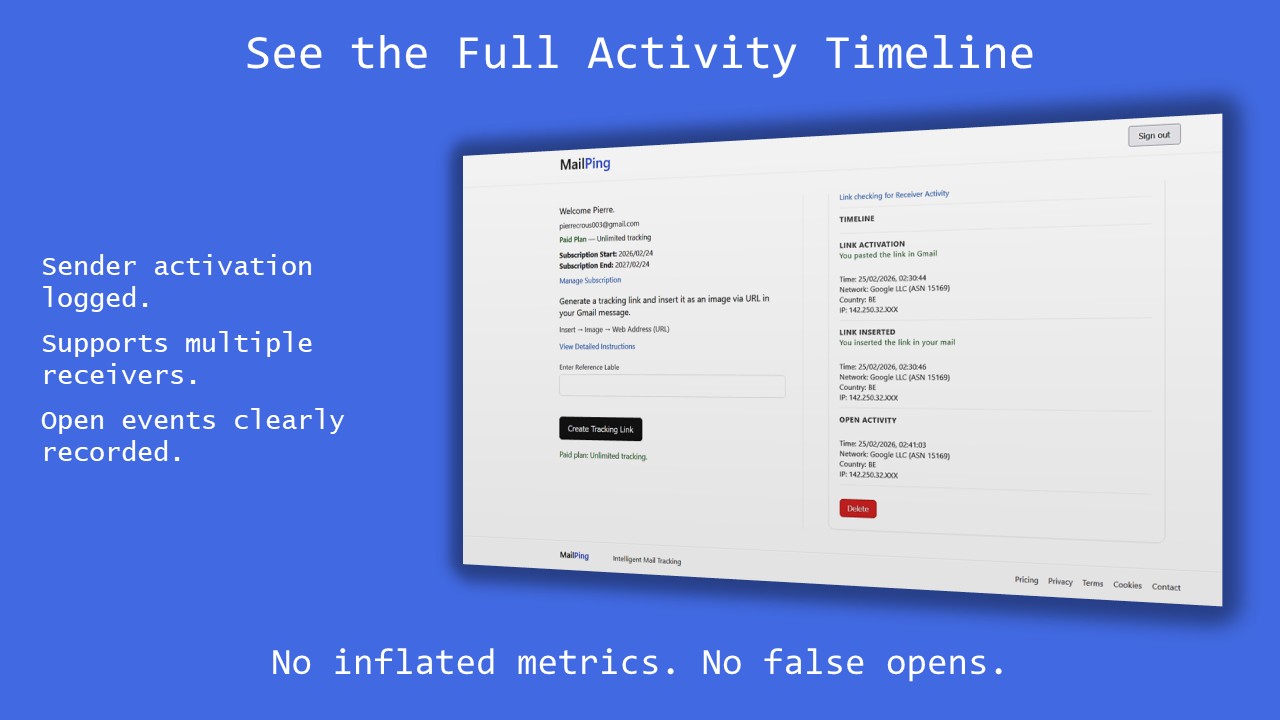
Yes. Because images are loaded through Google servers, the recorded IP address may reflect a Google data center rather than the recipient’s actual location.
See MailPing in Action