
Gmail Email Tracking: Complete Guide to Tracking Gmail Opens
Email tracking is widely used to measure engagement in marketing, sales, and customer communication workflows. This guide explains how Gmail email tracking works, how Gmail tracking pixels behave, how Gmail’s image proxy affects tracking signals, and the methods commonly used to monitor Gmail email opens.
However, Gmail does not handle email tracking in the same way as many traditional email clients. Gmail retrieves images through proxy infrastructure, which can change how tracking signals appear.
Because of this architecture, Gmail tracking data can sometimes appear inconsistent or inaccurate.
Jump to key Gmail tracking topics:
- Can You Track Emails in Gmail?
- How to Track Emails in Gmail
- How Gmail’s Image Proxy Affects Email Tracking
- How Accurate Is Gmail Email Tracking?
- Best Gmail Email Tracking Methods
- How to Track Email From Your Own Domain
- Mailtrack vs. MailPing: Proxy Awareness
- Why Extensions Are a Security Risk
- Tracking High-Stakes Personal Emails
Does Gmail Email Tracking Work?
Yes, Gmail email tracking works by detecting when a tracking image inside an email is loaded.
Most Gmail tracking systems use a small invisible image known as a tracking pixel. When the recipient opens the email and images load, Gmail retrieves that image through Google proxy servers. The image request confirms that the email content has been rendered.
How Gmail email tracking works:
- A unique tracking pixel is embedded in the email.
- The recipient opens the email.
- Gmail retrieves the image through proxy infrastructure.
- The image request confirms the email was opened.
Quick Summary:
- Gmail email tracking relies on tracking pixels.
- Gmail retrieves images through proxy infrastructure.
- Image requests may originate from Google servers rather than the recipient device.
- Tracking signals must be interpreted carefully.
Understanding how Gmail email tracking works, why tracking signals sometimes appear inaccurate, and the methods used to monitor engagement.
Complete Gmail Email Tracking Guide Series
This guide is the central hub of the MailPing Gmail email tracking series. The articles below explore the individual technical components of Gmail tracking in more detail.
- Can You Track Emails in Gmail? — explains whether Gmail supports email tracking and the limitations of Gmail’s built-in features.
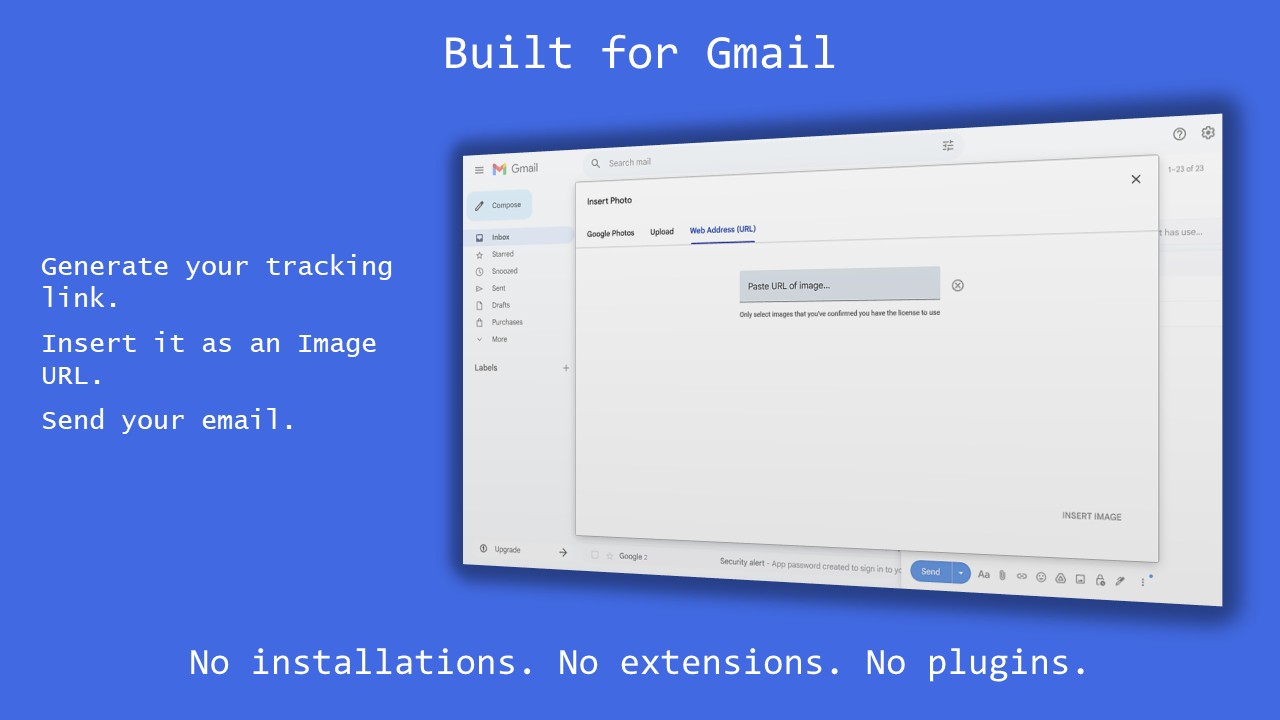
- How to Track Emails in Gmail — step-by-step instructions for tracking Gmail email opens using image-based tracking.
- How Gmail’s Image Proxy Affects Email Tracking — explains how Gmail retrieves images through proxy servers and how this affects tracking signals.
- How Accurate Is Gmail Email Tracking? — analysis of Gmail tracking reliability and the factors that influence open confirmations.
- Best Gmail Email Tracking Methods — compares different approaches used to monitor Gmail email engagement.
- How to Track Email From Your Own Domain — explains how domain-based sending affects email tracking environments.
- Mailtrack vs. MailPing: Proxy Awareness — compares the technical accuracy of Mailtrack vs. MailPing's proxy-aware system.
- Email Tracking Extension Security Risks — explains the privacy implications of granting extensions full inbox access.
- Tracking High-Stakes Personal Emails — explains why manual tracking is the gold standard for job applications and legal notices.
Guide Overview
This guide explains the technical foundations of Gmail email tracking and how tracking signals should be interpreted. If you are exploring a specific question, the following sections may help:
- Can You Track Emails in Gmail? — overview of Gmail tracking capabilities.
- How Accurate Is Gmail Email Tracking? — why Gmail tracking signals sometimes appear inconsistent.
- How Gmail’s Image Proxy Affects Email Tracking — technical explanation of Gmail’s proxy infrastructure.
- Best Gmail Email Tracking Methods — comparison of available tracking approaches.
- How to Track Email From Your Own Domain — tracking messages sent through Gmail aliases or domain addresses.
If your goal is simply to determine whether someone opened your email, you may also find these guides helpful:
- How to Know if Someone Read Your Email in Gmail
- No Reply After Sending an Email
- Email Opened But No Reply
- How Long to Wait Before Following Up on an Email
How Email Tracking Works
Gmail email tracking works by detecting when a tracking image inside an email is loaded.
Most systems track Gmail email opens using a small invisible image called a tracking pixel.
How Gmail email tracking works:
- A unique tracking image is embedded inside the email.
- The recipient opens the email and images load.
- Gmail retrieves the image through its proxy servers.
- The tracking system records the image request as an email open event.
Most email tracking systems rely on a small invisible image known as a tracking pixel.
When the recipient opens an email and images load, the email client requests that image from the sender’s server. That request confirms that the email content has been rendered.
For a detailed explanation see Can You Track Emails in Gmail? .
Gmail Image Infrastructure
Unlike many email clients, Gmail retrieves images through Google-controlled proxy infrastructure before delivering them to the recipient’s inbox.
This system scans images for security threats and may cache images before sending them to the user’s device.
Because image requests can originate from Google servers instead of the recipient device, tracking signals may appear unusual.
A deeper explanation can be found in How Gmail’s Image Proxy Affects Email Tracking .
To understand the broader infrastructure behind Gmail image retrieval, see how Gmail loads images, whether Gmail loads images automatically, whether Gmail caches images, why Gmail opens appear from Google IP addresses, and why Gmail blocks images.
You can also learn how tracking pixels work in this explanation of Gmail tracking pixels.
For a deeper explanation of Gmail’s security protections see Gmail external images security.
Why Gmail Tracking Can Look Inaccurate
- Image requests may originate from Google infrastructure
- Images may be cached and reused
- Multiple requests may occur for the same image
- Requests may occur before a user reads the message
These behaviors can cause tracking tools to report open events that appear earlier than expected or originate from unexpected locations.
For more details see
How Accurate Is Gmail Email Tracking?
.
However, the core issue is not that tracking data is inaccurate — it is that different email clients generate different types of signals that must be interpreted correctly. A deeper explanation of this can be found in
The Email Tracking Problem Isn’t the Data — It’s the Interpretation
,
which explains how Gmail, Apple Mail, and Outlook produce fundamentally different tracking behaviors.
Methods Used to Track Gmail Emails
Several approaches exist for monitoring Gmail email engagement.
- Tracking pixels embedded in email messages
- Email tracking tools designed for Gmail
- Read receipt systems available in some enterprise environments
A comparison of these approaches is available in Best Gmail Email Tracking Methods .
Tracking Email From Custom Domains
Many professionals send email from domain addresses such as [email protected] while still using Gmail as their interface.
Tracking behavior can depend on the infrastructure used to send the message.
See How to Track Email From Your Own Domain .
Does Gmail Block Email Tracking?
Gmail does not completely block tracking pixels. Instead, Gmail mediates how images are retrieved through proxy infrastructure.
For a deeper explanation see Does Gmail Block Email Tracking? .
Understanding Gmail Email Engagement Signals
Modern email analytics must distinguish between infrastructure-level events and real user engagement.
An image request confirms that content was rendered somewhere in the delivery chain, but it does not always guarantee that a human viewed the message.
Understanding how Gmail processes images is essential for interpreting engagement data correctly.
The Future of Gmail Email Tracking
Email tracking continues to evolve as email platforms introduce new security and privacy protections.
Proxy systems, caching layers, and privacy-focused design choices mean that tracking signals must be interpreted carefully.
As Gmail continues to dominate global email usage, understanding Gmail infrastructure will remain essential for anyone relying on email analytics.
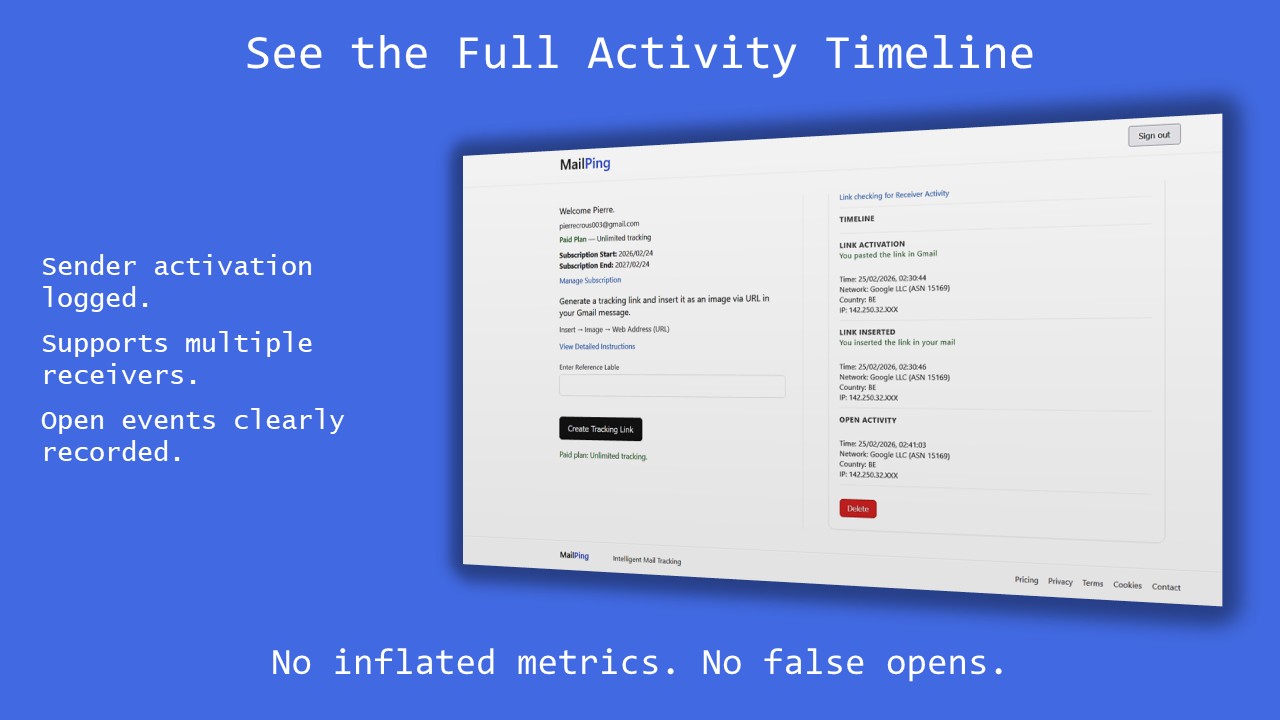
See MailPing in Action
Track the first real open — no fake signals, no inflated metrics.
Start Tracking Free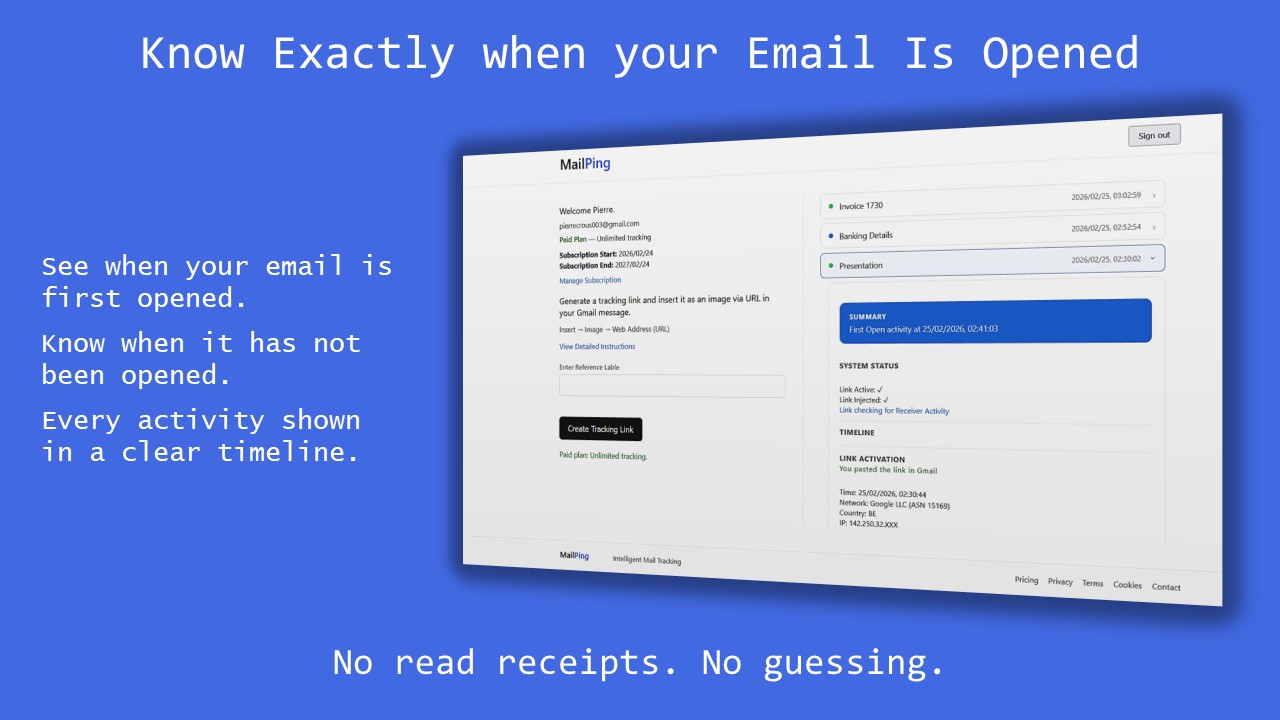
MailPing analyzes Gmail infrastructure and email tracking behavior through independent testing and research.
Source: MailPing Gmail Email Tracking Documentation — https://mailping.pro