
Your Email Client May Be Revealing Your IP Address
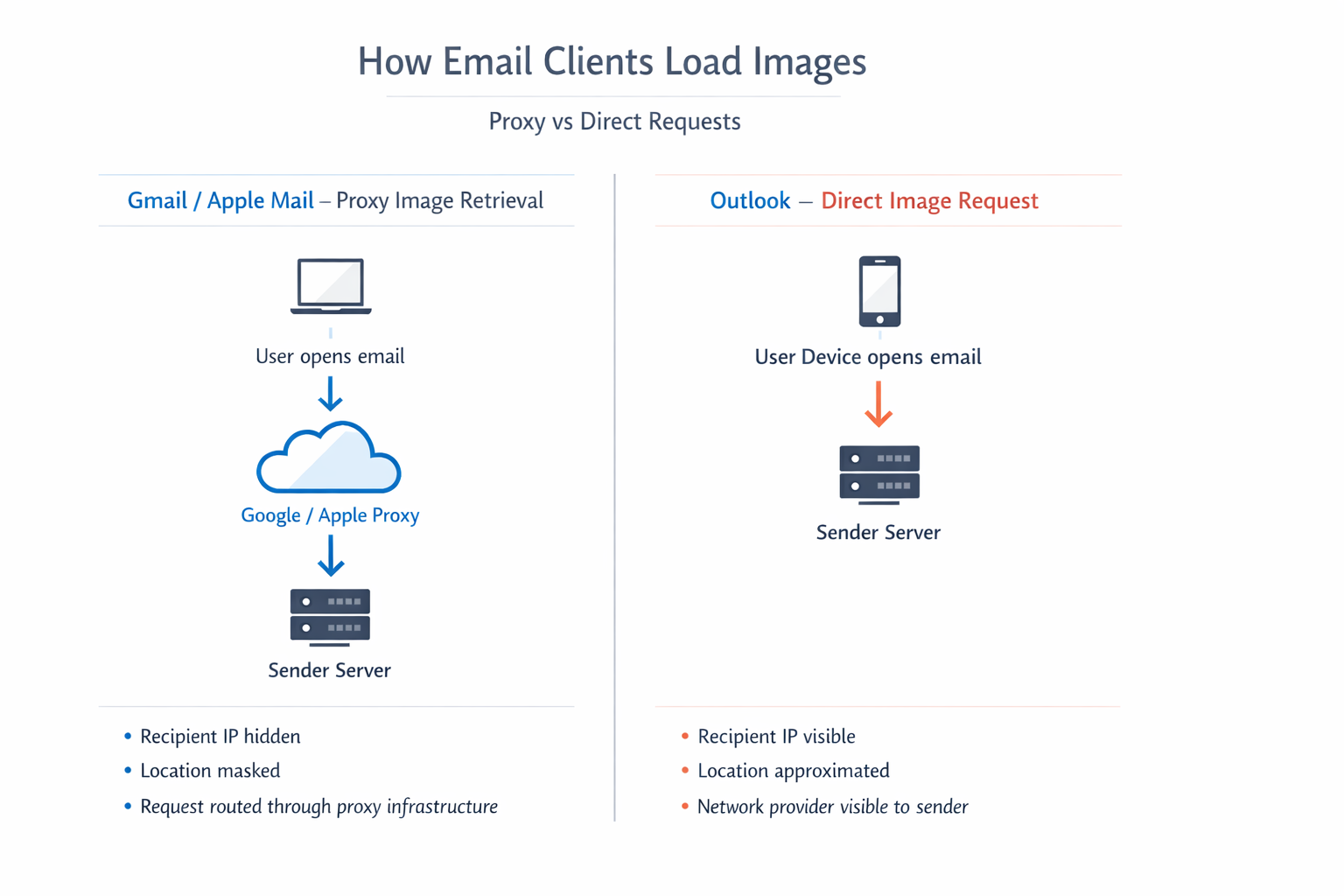
Most people assume their email activity is private. But when an email loads remote images, the request used to retrieve those images can reveal the recipient’s IP address, network provider, and approximate geographic location to the sender. Infrastructure testing by MailPing shows that Gmail and Apple hide recipient IP addresses using proxy systems, while Microsoft Outlook loads email images directly from the recipient device — exposing the user’s network identity during the request.
How Gmail and Apple Hide Recipient IP Addresses
This behavior occurs because most modern emails contain remote images or invisible tracking pixels. When the email client renders the message, it automatically retrieves those images from the sender’s server — and that request reveals network information unless the client hides it behind proxy infrastructure.
Modern email platforms increasingly route image requests through proxy infrastructure to protect recipient privacy. Gmail uses Google-operated image proxy servers, while Apple Mail Privacy Protection routes requests through Apple relay infrastructure.
When an email contains a remote image or tracking pixel, these proxy systems retrieve the image on behalf of the user. The sender infrastructure only sees the proxy server’s network identity rather than the recipient’s real IP address, internet provider, or geographic location.
This proxy architecture is explained in detail in our technical breakdown of how Gmail’s email image proxy works, which shows how Google retrieves and caches images before delivering them to the user.
Outlook Loads Images Directly From the User Device
Testing performed across multiple Outlook environments revealed a different behavior. Outlook clients on Android and Windows load remote email images directly from the recipient device instead of routing them through proxy infrastructure.
When this occurs, the sender-side server receives the request directly from the recipient’s device. This exposes the user’s IP address, approximate location, and network provider in standard HTTP request logs.
Additional infrastructure testing also reveals when these requests occur. In the Email Client Protocol Study – Gmail vs Apple vs Outlook , MailPing observed that Gmail generates a proxy-based image request before user interaction, while Apple Mail generates proxy requests only at open and Outlook loads images directly from the recipient device at open. This timing difference explains both why Gmail obscures user identity and why Outlook exposes it at the moment of engagement.
Why This Matters for Email Privacy
These findings are based on controlled infrastructure testing documented in the MailPing research paper Email Privacy Study: Gmail Masks User IP While Outlook Exposes It, which analyzed how different email clients retrieve remote images and whether those requests expose recipient network information.
Email engagement measurement systems depend on remote image requests to detect when messages are opened. When those requests pass through proxy infrastructure, senders lose visibility into the recipient’s real network environment.
However, when email clients load images directly from the user device, the sender infrastructure can observe IP address information and geographic metadata associated with the request.
These architectural differences determine how much network information email senders can observe about recipients. While some email ecosystems prioritize privacy through proxy architecture, others still allow direct device requests that reveal the recipient’s IP address when email images load.

MailPing conducts independent analysis of Gmail infrastructure, proxy image retrieval systems, and modern email tracking behavior through controlled testing and research.