Can You Track Emails in Gmail?
Last updated: February 27, 2026
Short Answer: Personal Gmail accounts do not provide built-in email open tracking. Google Workspace may allow limited read receipt requests depending on administrator settings, but confirmations are not guaranteed. Email tracking in Gmail works by embedding a unique image in the message and detecting when it loads.
Quick Summary:
- Personal Gmail accounts do not support built-in open tracking.
- Google Workspace may allow limited read receipts.
- Email tracking works by embedding a unique image.
- Tracking accuracy depends on image loading behavior.
Yes, but not natively. Gmail does not provide built-in tracking for personal accounts. However, you can track email opens by inserting a unique tracking image into your message.
Does Gmail Offer Built-In Email Tracking?
Standard personal Gmail accounts (@gmail.com) do not include open tracking or read confirmations. Gmail also does not provide built-in read receipts for personal accounts.
Some Google Workspace accounts allow users to request read receipts (see how to turn on read receipts in Gmail), but:
- The feature depends on administrator settings.
- Recipients may decline to send a receipt.
- Confirmations are not guaranteed.
For most users, Gmail itself does not provide reliable open tracking. If you want a deeper breakdown of available options, see how to know if someone read your email in Gmail.
Other Methods Users Consider
- Sending follow-up emails to request confirmation.
- Using Google Workspace read receipt requests (if enabled).
- Monitoring link click activity.
- Installing browser-based email tracking extensions.
Personal Gmail accounts do not include built-in tracking or read confirmation features.
How Email Tracking Works in Gmail
Definition: Email open tracking is a method of detecting when an email is displayed by embedding a unique image inside the message. When the image loads, the tracking system records the event.
Email tracking systems typically use a small, invisible image embedded in the email. When the recipient opens the message and images load, the tracking system records that event.
This method relies on image loading behavior rather than direct access to the recipient’s inbox.
Is Email Tracking in Gmail Accurate?
Email open tracking detects when an email is displayed and images are loaded. Technical factors—such as image blocking, caching, or forwarding—can influence results.
Accurate tracking systems focus on the first confirmed open event rather than counting repeated activity. If you're trying to determine whether someone read your email in Gmail, this distinction matters.
Technical Considerations
Gmail uses image proxy servers that may cache images before delivering them to recipients. This can affect how tracking signals appear. Some tracking systems focus on identifying the first confirmed open event rather than counting repeated image loads.
Forwarding, device switching, and image blocking settings can also influence whether an open event is recorded.
How MailPing Tracks Gmail Opens
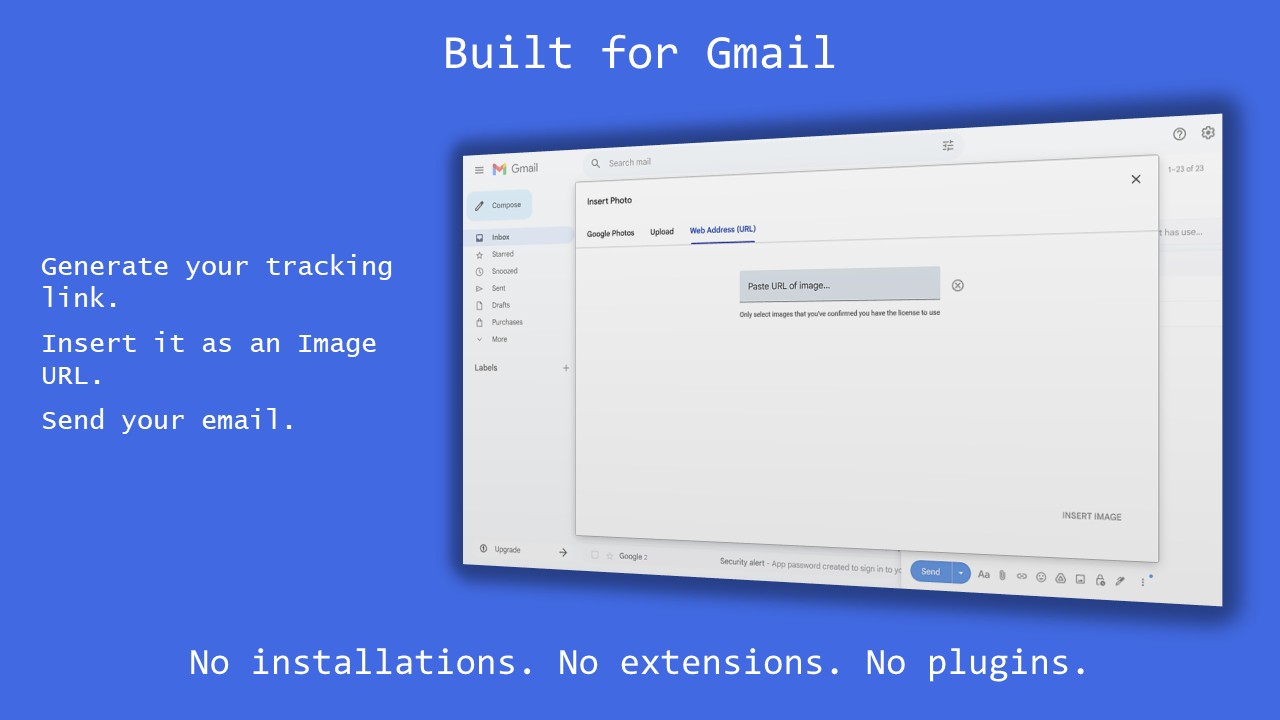
MailPing generates a unique tracking image link that you insert into your Gmail message using:
Insert → Image → Web Address (URL)
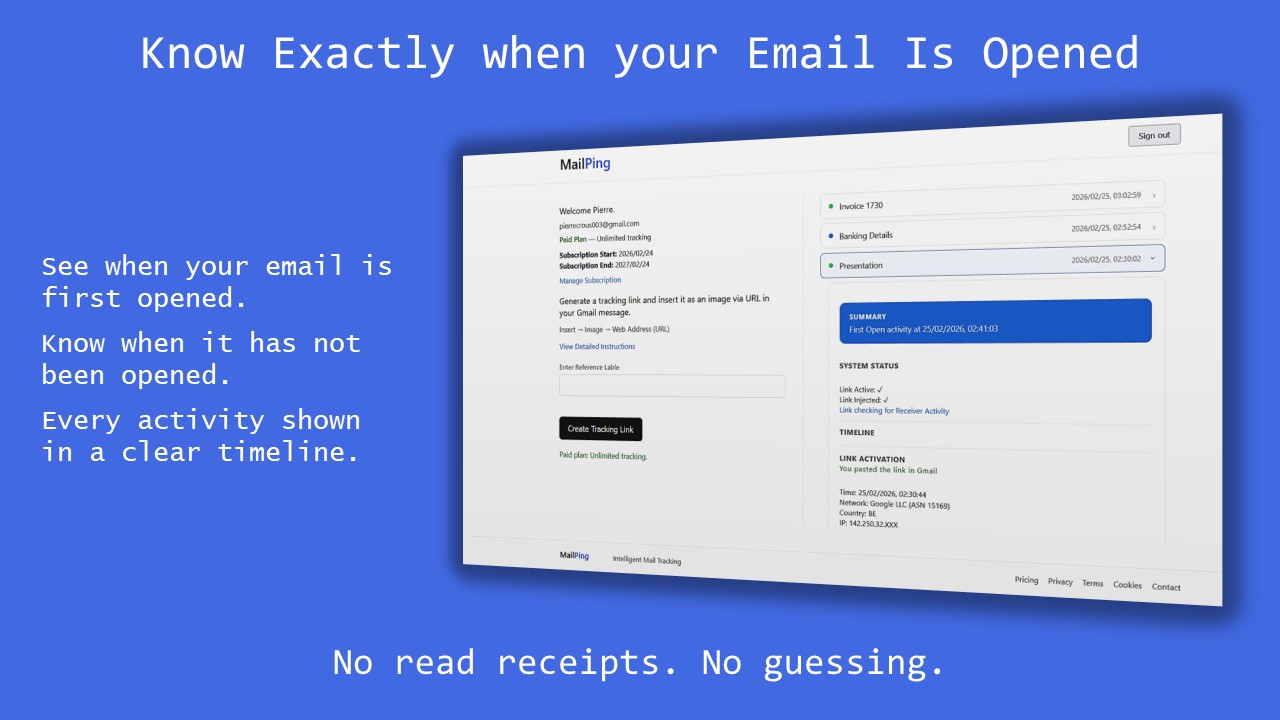
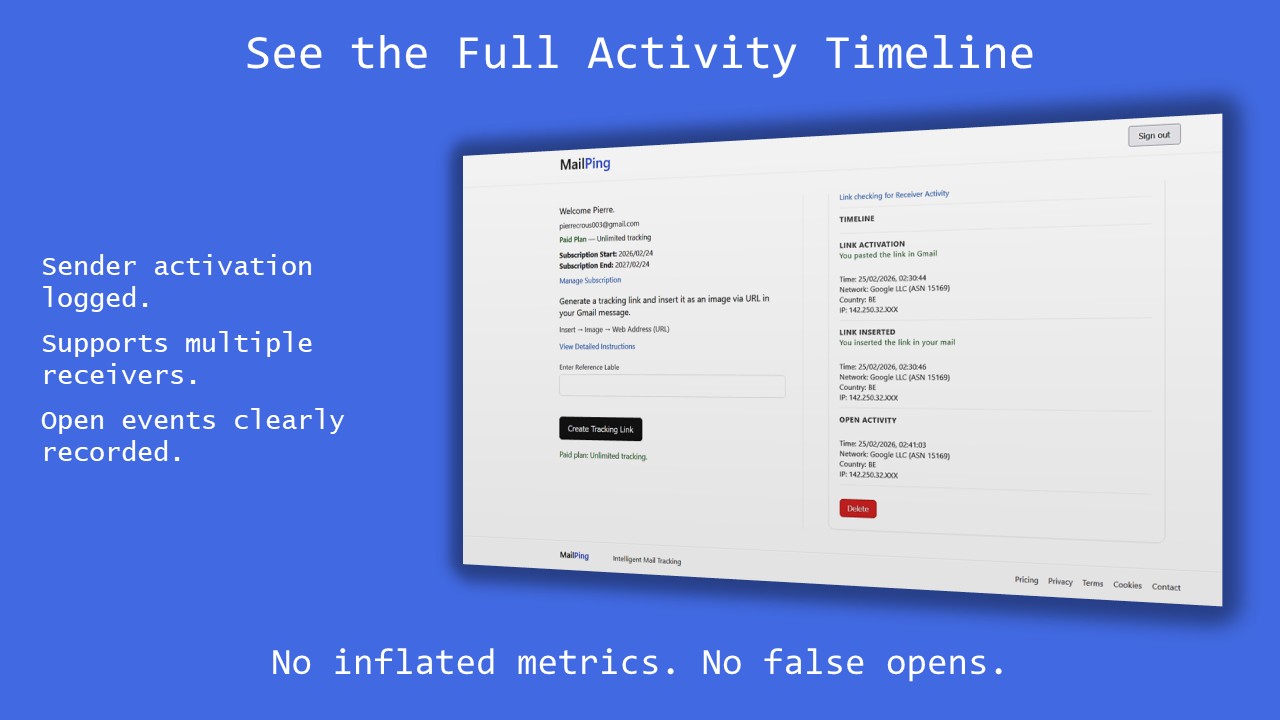
When the email is opened and images load, MailPing records the first confirmed open activity and displays the timestamp inside your dashboard.
MailPing does not attempt to identify individuals and does not inflate repeated open signals. It focuses on clear, timestamp-based confirmation.
Looking specifically for a Gmail read receipt alternative? Learn how tracking compares to Gmail’s limited built-in options.
Frequently Asked Questions
Can Gmail track when someone opens an email?
No. Personal Gmail accounts do not provide built-in open tracking.
Is tracking emails in Gmail legal?
Email tracking legality depends on local laws and how tracking is disclosed. Users should ensure compliance with applicable privacy regulations in their region.
Do recipients know when an email is tracked?
Tracking methods rely on image loading. Gmail does not automatically notify recipients that an email contains a tracking image.
See MailPing in Action