Is Email Tracking Legal in Gmail?
Last updated: February 27, 2026
Short Answer: Email tracking legality depends on your local laws, how tracking data is processed, and whether appropriate disclosure practices are followed. Laws vary by country and region.
Quick Summary:
- Legality depends on jurisdiction.
- Disclosure requirements vary by region.
- Tracking relies on image loading behavior.
- Users should review applicable privacy laws.
Email tracking in Gmail is not universally illegal, but legality depends on your local laws and how tracking data is handled. Requirements often relate to transparency, data processing practices, and applicable privacy regulations.
How Email Tracking Works
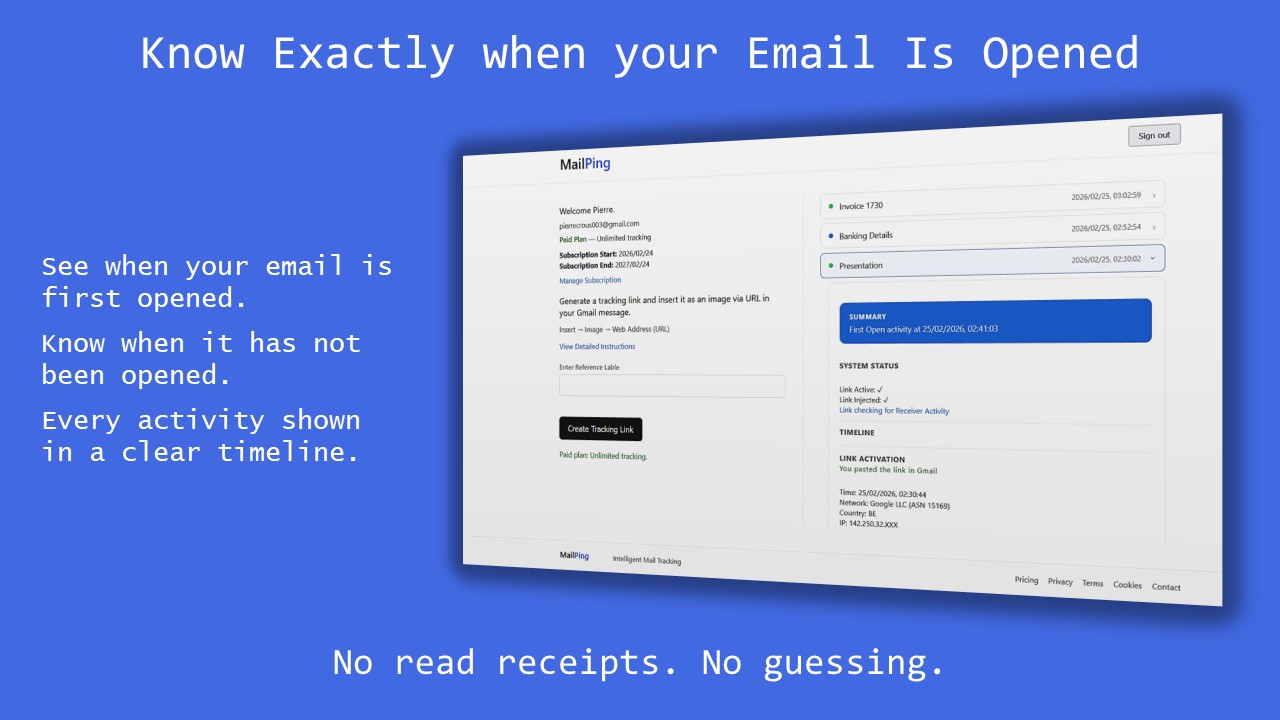
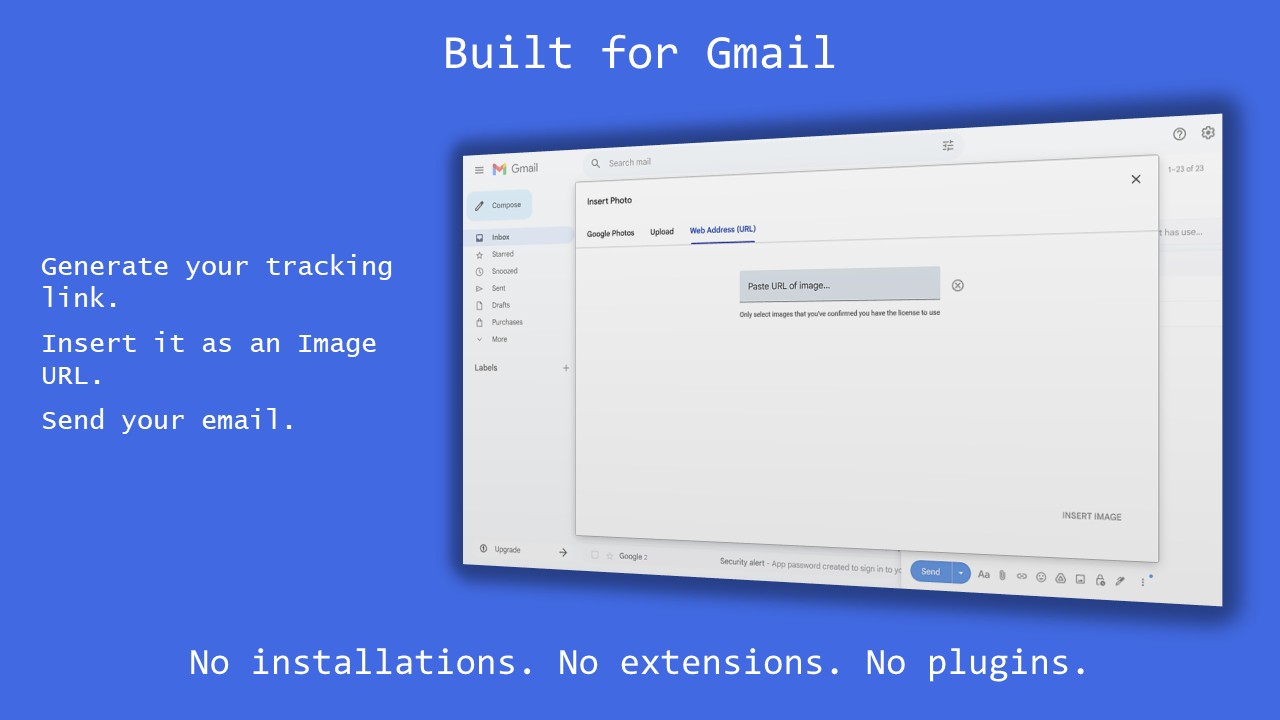
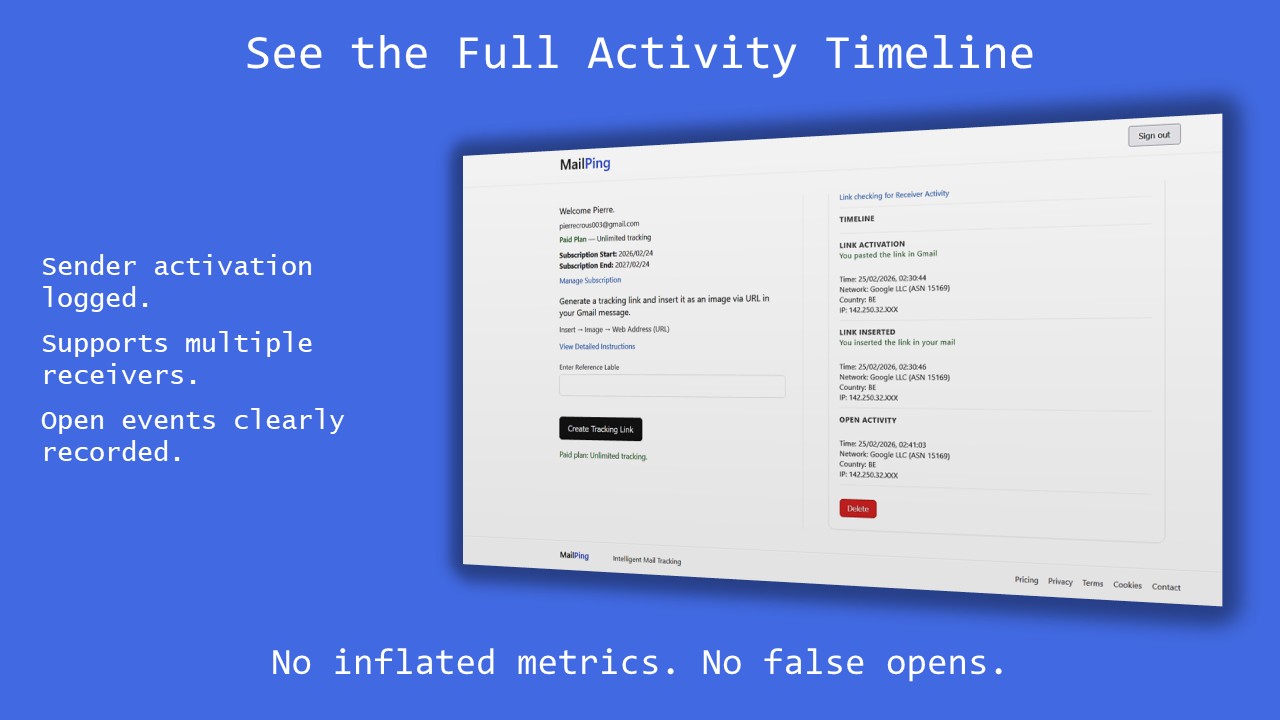
Email tracking typically works by embedding a unique image in your message. When the recipient opens the email and images load, the tracking system records that event.
This method does not access inbox content. It relies on whether external images are requested when the email is viewed.
Tracking detects image loading — not reading comprehension, not intent, and not private message content.
Learn more about how Gmail tracking works and how open detection functions technically.
Definition: Email tracking legality refers to whether the use of image-based open detection complies with applicable privacy, data protection, and electronic communication laws in a given jurisdiction.
Legal Considerations
Email tracking laws vary by jurisdiction. There is no single global rule that applies everywhere.
Legality often depends on factors such as:
- Whether personal data is collected.
- How that data is stored and processed.
- Whether the tracking is used for personal communication or business purposes.
- Disclosure and transparency practices.
- Applicable privacy regulations in your region.
In many jurisdictions, the key legal questions involve transparency and data handling rather than the technical act of embedding an image.
Users should review privacy and electronic communication regulations applicable to their country and, where necessary, seek independent legal advice.
Regional Differences in Privacy Regulations
Different regions regulate electronic communication differently.
- European Union: Privacy and electronic communication laws may require transparency when personal data is processed.
- United States: Regulations vary by state and context (business vs personal communication).
- Other regions: Local data protection laws may impose disclosure or consent requirements.
Because regulations evolve, it is important to stay informed about the rules that apply to your specific location and use case.
Is Tracking the Same as Gmail Read Receipts?
No. Built-in read receipts (see Gmail read receipt limitations) are available only in certain Google Workspace environments.
Tracking images operate independently of Gmail’s native features.
Best Practices for Responsible Use
Regardless of jurisdiction, responsible use of email tracking includes:
- Understanding local privacy regulations.
- Using tracking for legitimate communication purposes.
- Providing appropriate disclosure when required.
- Avoiding deceptive or misleading practices.
- Respecting recipient privacy expectations.
Tracking should be used as a confirmation tool, not as a surveillance mechanism.
For technical accuracy considerations, see Gmail tracking accuracy explained.
Note: This page provides general informational guidance and does not constitute legal advice.
Frequently Asked Questions
Is Gmail email tracking legal?
Email tracking legality depends on local privacy laws, how tracking data is processed, and whether appropriate disclosure practices are followed. Regulations vary by country and region.
Do I need to tell recipients about tracking?
Disclosure requirements vary by region and local regulations.
Is tracking different from Gmail read receipts?
Yes. Tracking relies on image loading behavior, while read receipts are built-in Workspace features.
Is email tracking legal for personal use?
In many regions, personal use tracking is treated differently from commercial or marketing use. Local regulations should always be reviewed.
Is email tracking considered personal data processing?
This depends on what information is collected and how it is stored. Some jurisdictions classify IP addresses and device data as personal information.
Do businesses need consent for email tracking?
Consent and disclosure requirements vary by country and regulatory framework. Businesses should review applicable data protection laws.
Is Gmail responsible for tracking legality?
No. Gmail provides the email platform, but responsibility for how tracking is used typically rests with the sender.
See MailPing in Action