How Gmail Image Proxy Affects Email Tracking
Last updated: February 27, 2026
Short Answer: Gmail retrieves images through proxy servers and may cache them before delivering emails to recipients. This can influence how tracking signals appear.
Quick Summary:
- Gmail loads images via proxy servers.
- Images may be cached before delivery.
- Tracking detects image loading events.
- Accurate systems focus on identifying meaningful open signals.
Gmail uses image proxy servers that retrieve and sometimes cache images before delivering emails to recipients. This changes how tracking signals appear but does not prevent meaningful open confirmation when images are loaded.
What Is Gmail Image Proxy?
Gmail does not load images directly from the sender’s server in most cases. Instead, it retrieves images through Google’s proxy infrastructure before delivering them to the recipient.
This system was introduced to improve:
- Security by preventing direct exposure of a recipient’s IP address.
- Performance through image caching and faster load times.
- Spam protection and malware filtering.
While this architecture improves user safety and speed, it changes how image requests appear from a technical perspective. Instead of the recipient’s device contacting the image server directly, the request may first pass through Google’s proxy servers.
This architectural difference is what influences how email tracking signals are recorded.
How Proxy Caching Influences Tracking
Because Gmail may cache images through its proxy layer, tracking behavior can differ from direct image loading systems.
- The first image retrieval may occur when Gmail prepares the message for viewing.
- Subsequent opens may load images from cache rather than generating a new external request.
- Opening the same email on multiple devices may generate additional image loads.
- Forwarded emails may trigger new image retrievals.
Importantly, proxy retrieval does not mean the recipient did not open the message. It simply means the request path differs from traditional direct-loading behavior.
For a broader breakdown of how these factors influence measurement, see Gmail tracking accuracy explained.
Does This Make Tracking Useless?
No. Proxy architecture changes how signals are recorded, but it does not eliminate the ability to detect meaningful open events.
Well-designed tracking systems interpret image load behavior carefully rather than assuming every signal represents a confirmed read. Instead of counting every request, modern systems focus on identifying the first meaningful open event.
Unlike built-in read receipts (see Gmail read receipt limitations), image-based tracking does not require recipient approval and works with personal Gmail accounts.
How MailPing Interprets Proxy Signals
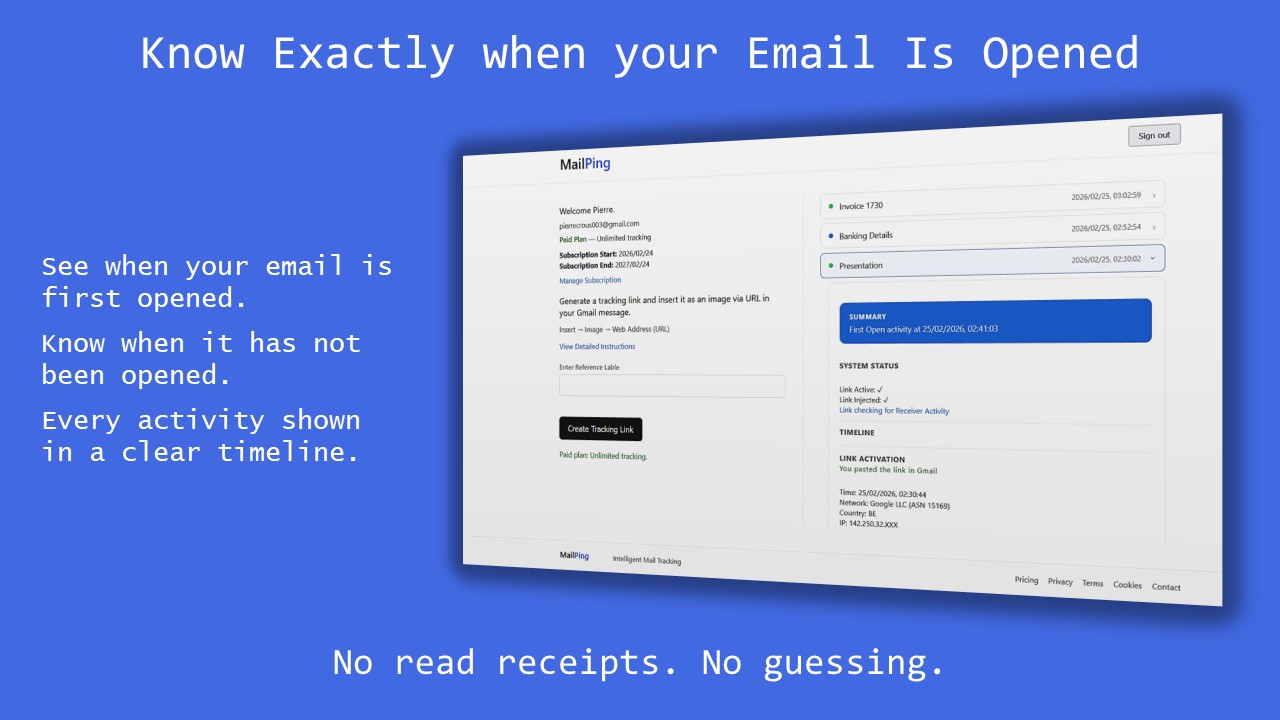
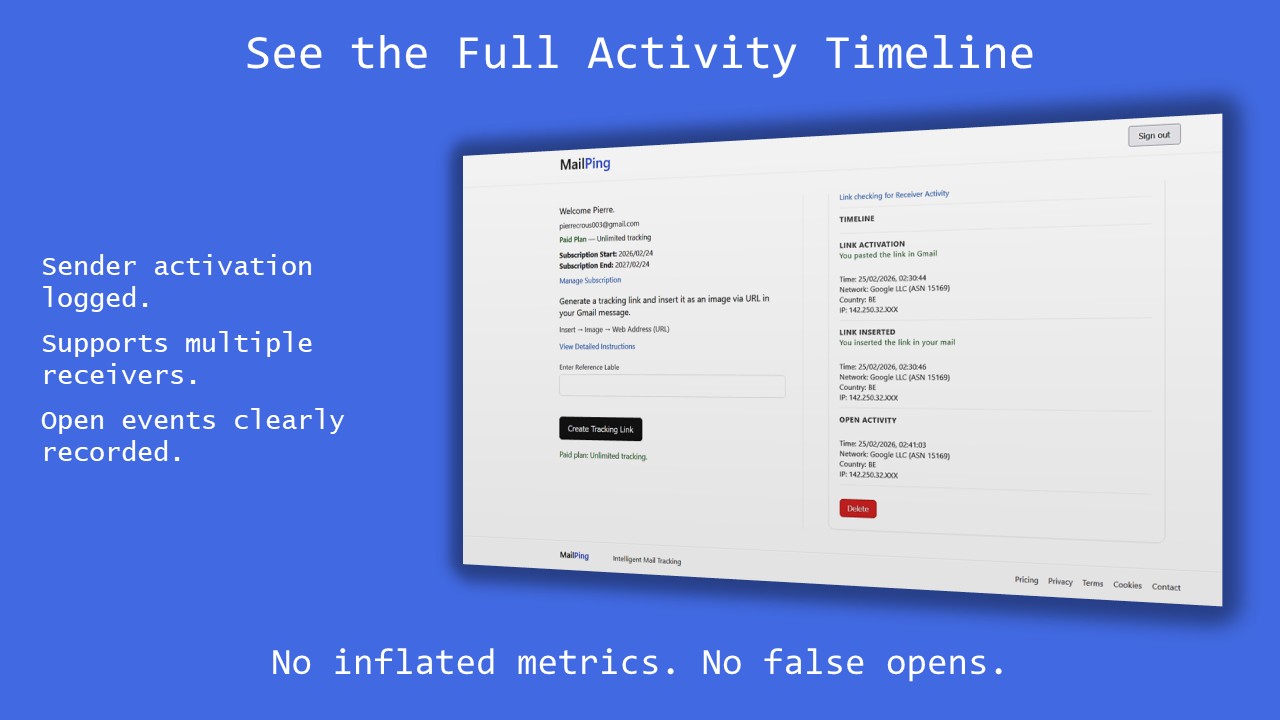
MailPing focuses on identifying the first confirmed open event rather than inflating repeated signals.
Learn more about tracking emails in Gmail and how confirmation works.
Why Understanding Proxy Behavior Matters
Many users misunderstand Gmail proxy activity and assume that tracking is unreliable. In reality, understanding how proxy infrastructure works allows you to interpret tracking signals more accurately.
Email tracking does not measure whether someone carefully read every word. It detects when the message was opened and images were loaded. That distinction is important.
If you're trying to confirm whether someone opened your Gmail email, tracking provides confirmation of image load activity — not reading comprehension.
Understanding this difference prevents misinterpretation and builds realistic expectations about how tracking works.
Frequently Asked Questions
What is Gmail image proxy?
Gmail retrieves images through Google-controlled proxy servers before delivering them to recipients. This changes how image requests appear technically but improves security and performance.
Does Gmail cache tracking images?
Yes. Gmail may cache images after initial retrieval. This can influence how repeated opens appear in tracking systems.
Does proxy caching make tracking inaccurate?
Proxy caching changes signal patterns but does not eliminate the ability to detect meaningful open activity.
See MailPing in Action