Why You Should Never Give Email Tracking Extensions Full Inbox Access
Last updated:
Short Answer: Most tracking extensions require full access to your Gmail inbox, which poses a privacy risk. MailPing is a safer alternative because it requires zero permissions to read or manage your emails.
Quick Summary:
- Standard extensions request "Read, Write, and Delete" permissions.
- These permissions allow third parties to theoretically access sensitive data.
- MailPing uses Google Identity for login only—no inbox access.
- Manual pixel insertion is the most secure way to track personal mail.
When you install a typical Gmail tracking extension, the first thing you see is a terrifying permissions pop-up. Google warns you that the app wants to "Read, compose, send, and permanently delete all your email." While most developers aren't malicious, granting this level of access to your personal correspondence is a significant security trade-off just to see if a recipient opened a message.
The "Read, Write, and Delete" Permission Trap
Most tracking extensions operate by injecting code directly into your Gmail interface. To do this, they require broad administrative permissions. This means the service doesn't just see the tracking pixel—it has the technical capability to scan your entire inbox, read private financial documents, and even delete messages. In a world where data breaches are common, giving a third-party startup the "keys to your kingdom" is a risk that many privacy-conscious users are no longer willing to take. You can read more about is email tracking legal in Gmail to understand the regulatory landscape of these permissions.
Why MailPing Requires Zero Inbox Permissions
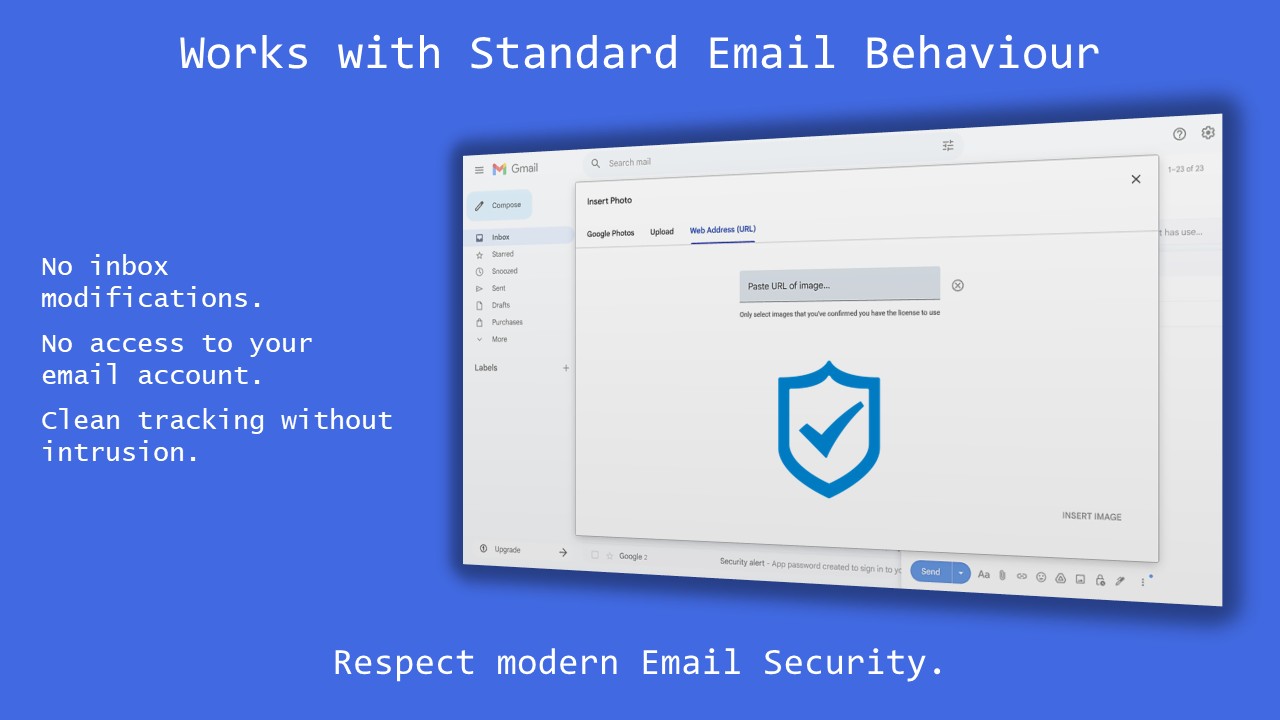
MailPing was built as a "permission-less" alternative. We believe that tracking an email open should never require us to read your emails. When you sign up, we use Google Identity Services (GIS) to securely create your account, but we never ask for access to your Gmail data. Because you manually insert the tracking image into your email, there is no need for a "middle-man" extension to monitor your account. Your inbox remains your own, 100% private and untouched. This is why we are considered the leading Gmail read receipt alternative for security-first users.
Manual Insertion: The Security Feature of 2026
Some might call the process of generating a link and pasting it into Gmail "friction," but we view it as a critical security feature. This manual step ensures that you—and only you—decide which emails are tracked. Unlike automated extensions that track every single message (including personal family emails or bank alerts), MailPing gives you granular control. This method is also platform-agnostic; while extensions often break with Gmail updates or slow down your browser, a manual tracking pixel is lightweight and permanent. For a step-by-step guide on how this works, see how to track emails in Gmail without invasive software.