Gmail Tracking Without Extensions
Last updated:
Short Answer: Yes, you can track Gmail email opens without installing browser extensions. Instead of using plugins, tracking can work by inserting a unique image link directly into your Gmail message.
Quick Summary:
- No browser extension required.
- Works inside Gmail web.
- Uses image loading behavior.
- Compatible with personal Gmail accounts.
You can track Gmail email opens without installing browser extensions by inserting a unique tracking image into your message. When the recipient opens the email and images load, the tracking system records that activity.
For a complete overview of Gmail tracking systems and how image-based tracking fits into Gmail infrastructure, see the Gmail email tracking guide.
If you're evaluating different tracking approaches — including extensions, image-based tracking, and Workspace read receipts — see best Gmail email tracking methods for a full comparison of what works best in different situations.
Why Some Users Avoid Gmail Extensions
- Privacy concerns about browser permissions.
- Workplace restrictions on installing plugins.
- Browser compatibility issues.
- Performance concerns.
- Security policies that prohibit third-party inbox access.
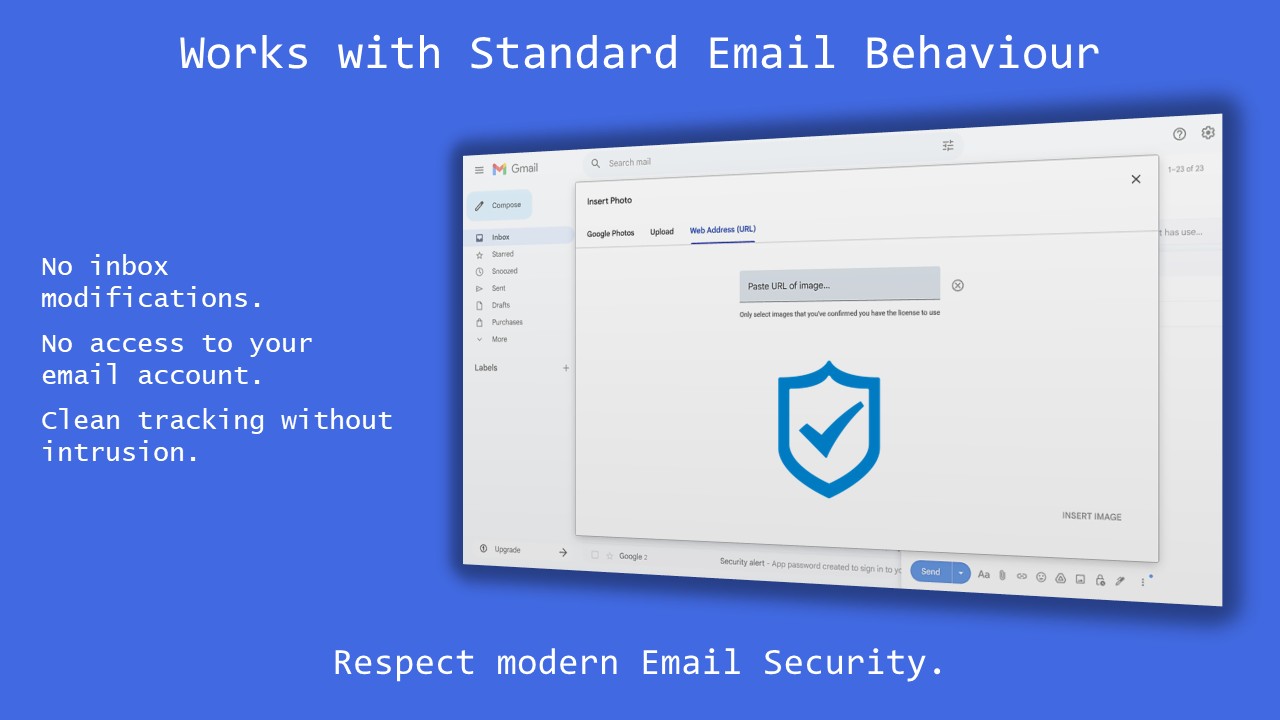
Many tracking extensions request broad permissions inside your Gmail account. While this may enable additional features, some users prefer not to grant inbox-level access to external tools.
For users who only need confirmation that a specific email was opened, installing a browser extension may feel excessive.
Definition: Gmail tracking without extensions refers to confirming email opens using image-based tracking instead of browser plugins or inbox-integrated tools.
How Gmail Tracking Works Without Extensions
Email open tracking works by embedding a unique image into your email. When the recipient opens the message and images load, the tracking system records that event.
If you need a practical walkthrough, see how to track emails in Gmail step-by-step for a complete setup guide.
This method relies on standard email behavior — external images loading when a message is viewed. It does not require:
- Inbox access
- Browser-level permissions
- Account synchronization
- Background monitoring
Because it uses standard image loading mechanics, this approach works with personal Gmail accounts.
Tracking reliability depends on how images are loaded and cached. For a clearer breakdown of real-world accuracy, see how accurate Gmail email tracking is and what technical factors influence results.
However, the key factor is not just how tracking works — it is how the resulting signals are interpreted. A deeper explanation of this can be found in
The Email Tracking Problem Isn’t the Data — It’s the Interpretation
,
which explains how Gmail, Apple Mail, and Outlook generate fundamentally different tracking behaviors.
Learn more about tracking emails in Gmail and how image-based confirmation works.
Does This Work With Personal Gmail?
Yes. Unlike built-in read receipts (see Gmail read receipt limitations), image-based tracking works with standard personal @gmail.com accounts.
Personal Gmail does not provide automatic read confirmations. Tracking through image loading offers an alternative method for confirming whether an email was opened.
If you're trying to determine whether someone read your email in Gmail, this method provides confirmation when images are enabled and loaded.
How MailPing Enables Tracking Without Extensions
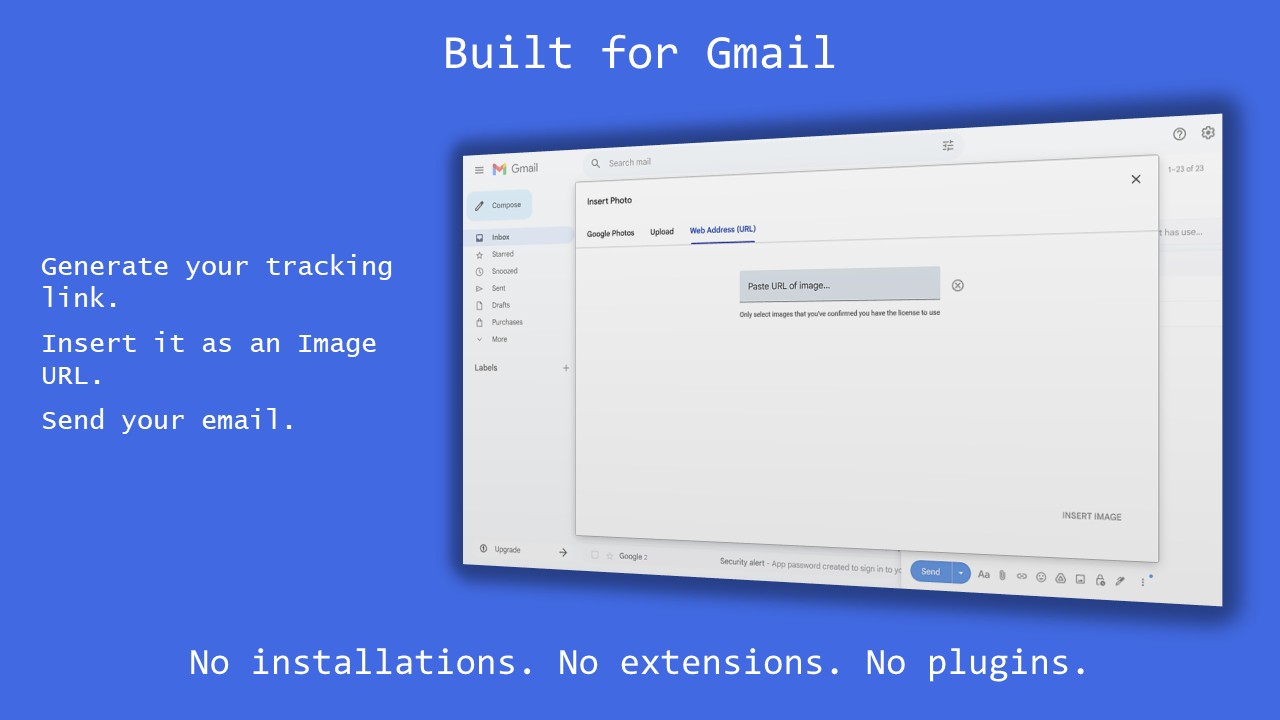
MailPing generates a unique tracking image link that you insert using:
Insert → Image → Web Address (URL)
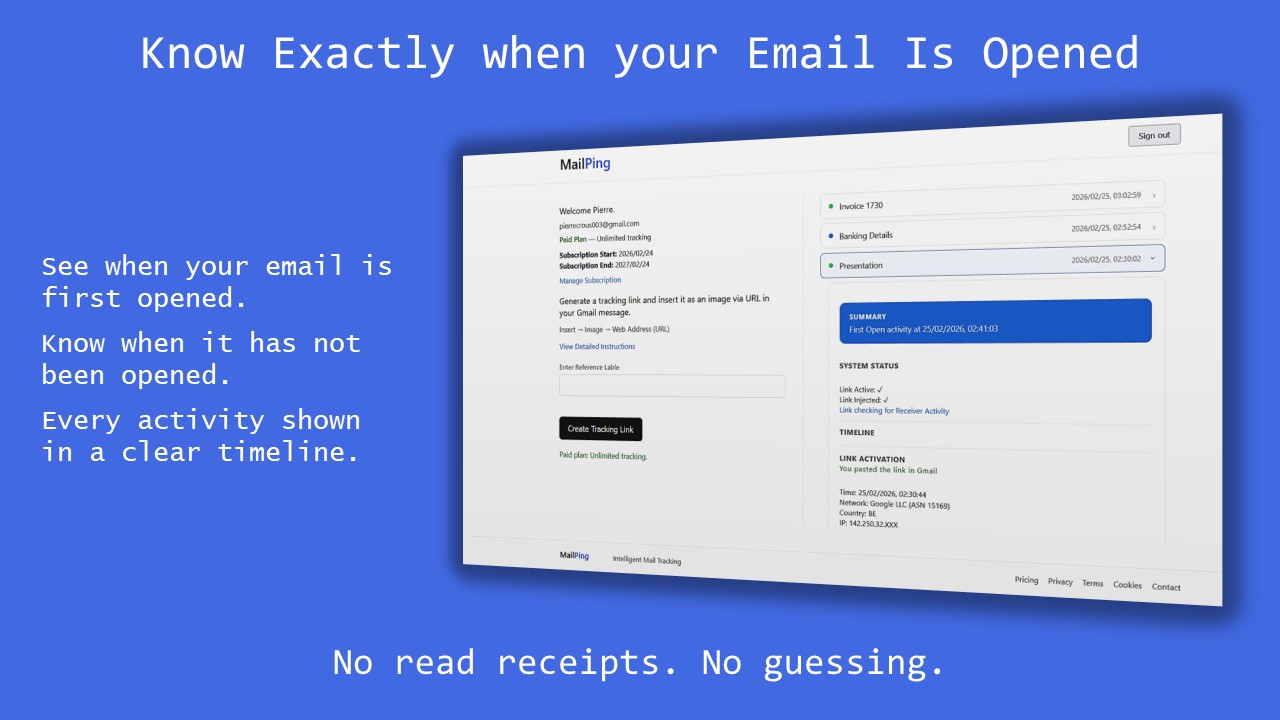
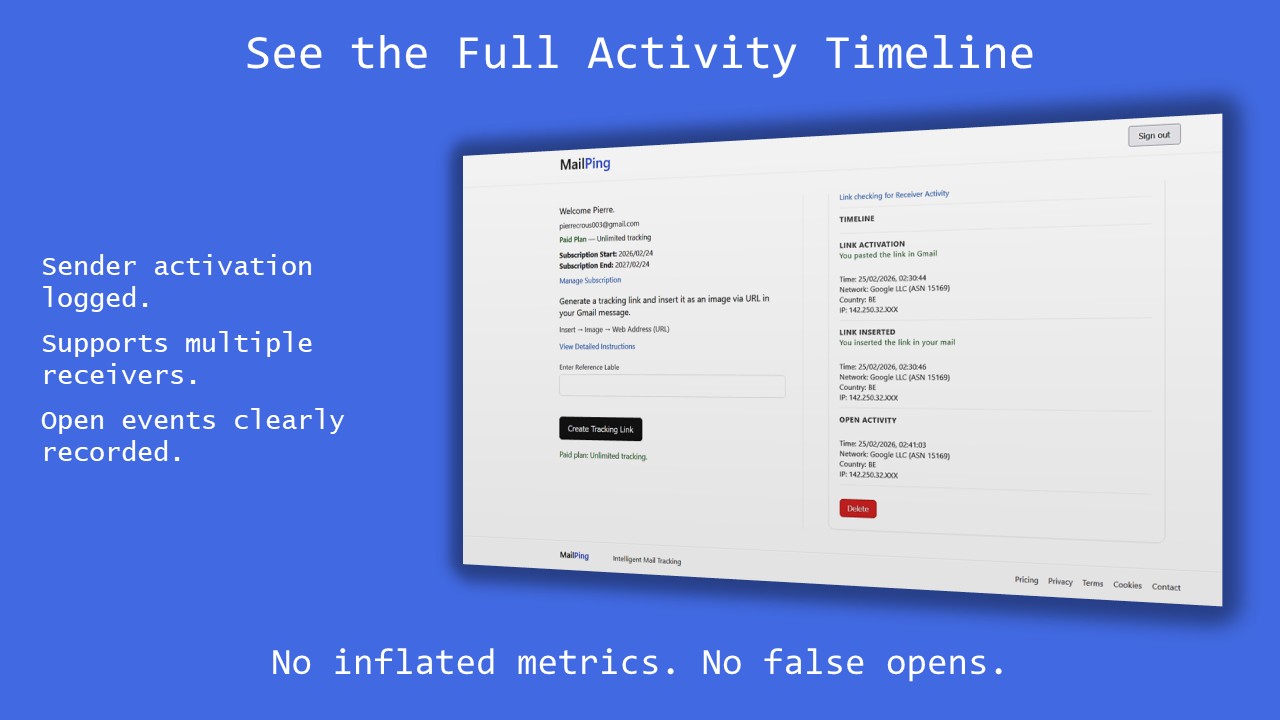
When the email is opened and images load, MailPing records the first confirmed open timestamp inside your dashboard.
Tracking works across devices, including smartphones and tablets. Learn more about how to track Gmail emails on mobile and how device differences influence confirmation signals.
Extension-Based Tracking vs Image-Based Tracking
There are two primary approaches to Gmail tracking:
- Extension-based tracking: Requires installing a browser plugin that integrates directly with your Gmail inbox.
- Image-based tracking: Uses a unique image inserted into your email to detect when it is opened.
Extension-based tools may offer additional features such as scheduling or analytics dashboards. However, they require inbox-level access and ongoing browser integration.
Image-based tracking focuses purely on open confirmation and does not require ongoing integration inside your account.
Choosing between these approaches depends on your needs, privacy preferences, and technical comfort level.
Track the first real open — no fake signals, no inflated metrics.
Start Tracking FreeFrequently Asked Questions
Can I track Gmail emails without installing an extension?
Yes. Image-based tracking works without browser plugins by inserting a unique image link into your email. When the recipient opens the message and images load, the tracking system records that activity. If you're unsure how Gmail behaves from the recipient side, see whether Gmail notifies someone when you open an email for more detail.
How does Gmail tracking work without extensions?
Tracking works by embedding a unique image inside your email. When the message is opened and images load, the request for that image is logged as an open event.
Does Gmail block tracking pixels?
Gmail does not block tracking pixels, but it routes image requests through its own proxy servers. This can affect how opens are recorded, but tracking still works in most cases.
Does this work on mobile Gmail?
Yes. Image-based tracking works across desktop and mobile devices, as long as images are enabled and loaded in the email.
Can tracking work if images are turned off?
No. If the recipient disables images, the tracking image will not load, and no open event can be recorded.
Is tracking without extensions accurate?
It provides a reliable first-open signal, but accuracy depends on how email clients handle image loading and caching. Some opens may not be captured, and some signals may be influenced by proxy behavior.
Do I need a Google Workspace account?
No. This method works with standard personal Gmail accounts and does not require Workspace features.
See MailPing in Action