How to Track Emails in Gmail
Last updated:
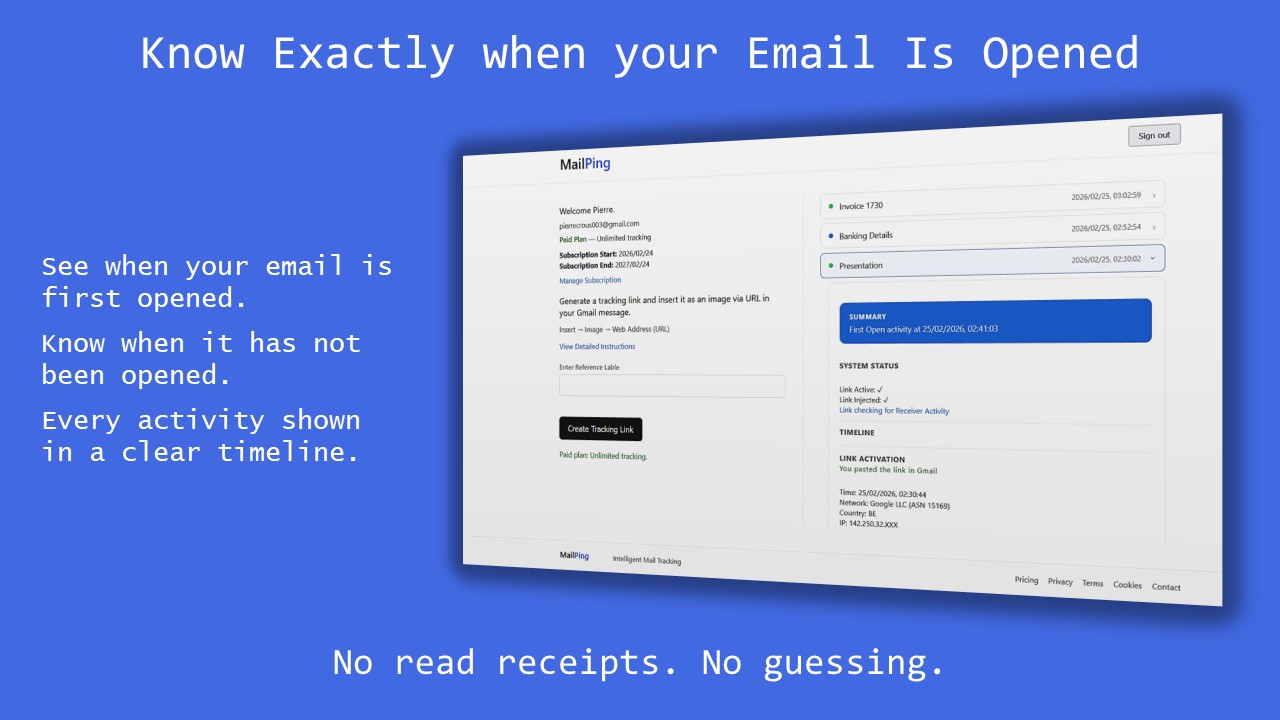
Short Answer: You can track emails in Gmail by inserting a unique tracking image into your message. When the recipient opens the email and images load, the tracking system records the first confirmed open event.
How to track emails in Gmail:
- Create a tracking image link.
- Open Gmail and compose a new email.
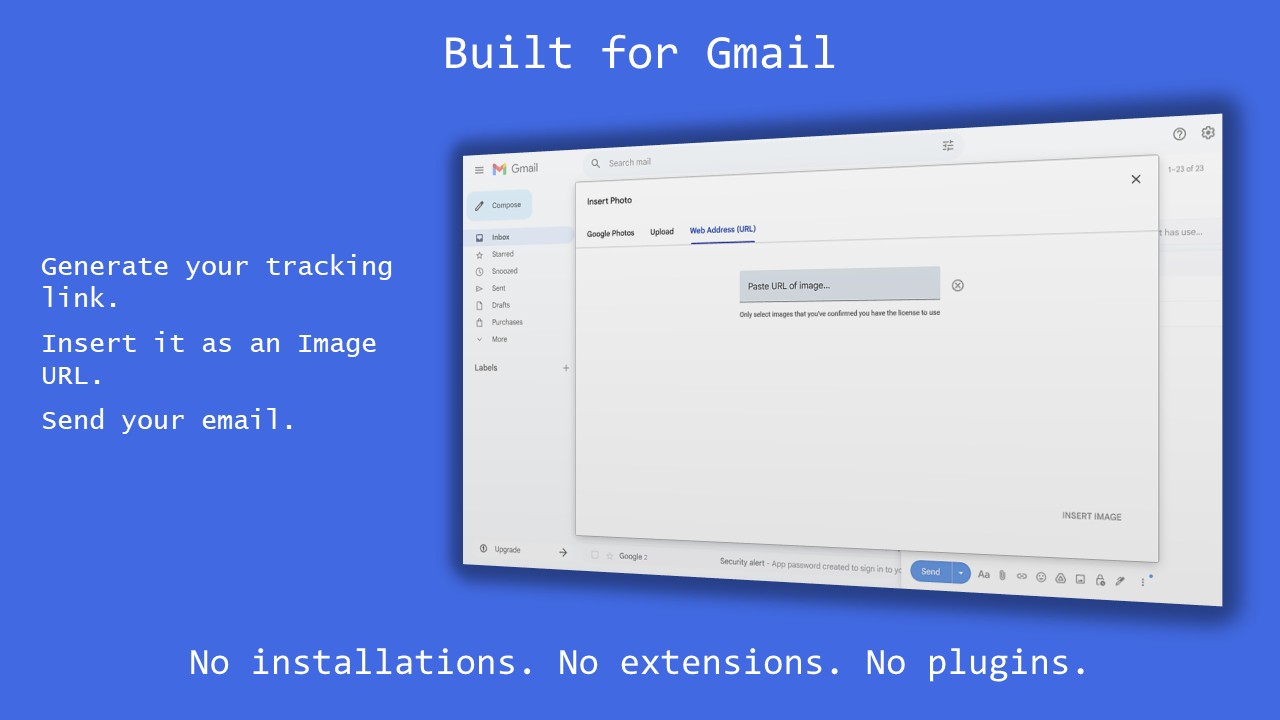
- Select Insert → Image → Web Address (URL).
- Paste the tracking image link.
- Send the email.
- Check your dashboard for the open confirmation.
Quick Summary:
- Personal Gmail does not include built-in tracking.
- Email tracking works by embedding a unique image.
- No browser extension is required.
- Tracking confirms when images are loaded.
If you're comparing different approaches — including extensions, read receipt requests, and image-based tracking — see best Gmail email tracking methods for a full breakdown of what works and when to use each option.
For a complete explanation of how Gmail tracking works internally — including tracking pixels and Gmail image proxy behavior — see the complete Gmail email tracking guide.
Gmail does not include built-in open tracking for personal accounts. However, you can track email opens by inserting a unique tracking image into your message. When the email is opened and images load, the system records that activity.
Step-by-Step: How to Track Emails in Gmail
- Create a unique tracking image link.
- Open Gmail in your web browser.
- Compose a new email.
- Select Insert → Image → Web Address (URL).
- Paste the tracking image link.
- Send your email.
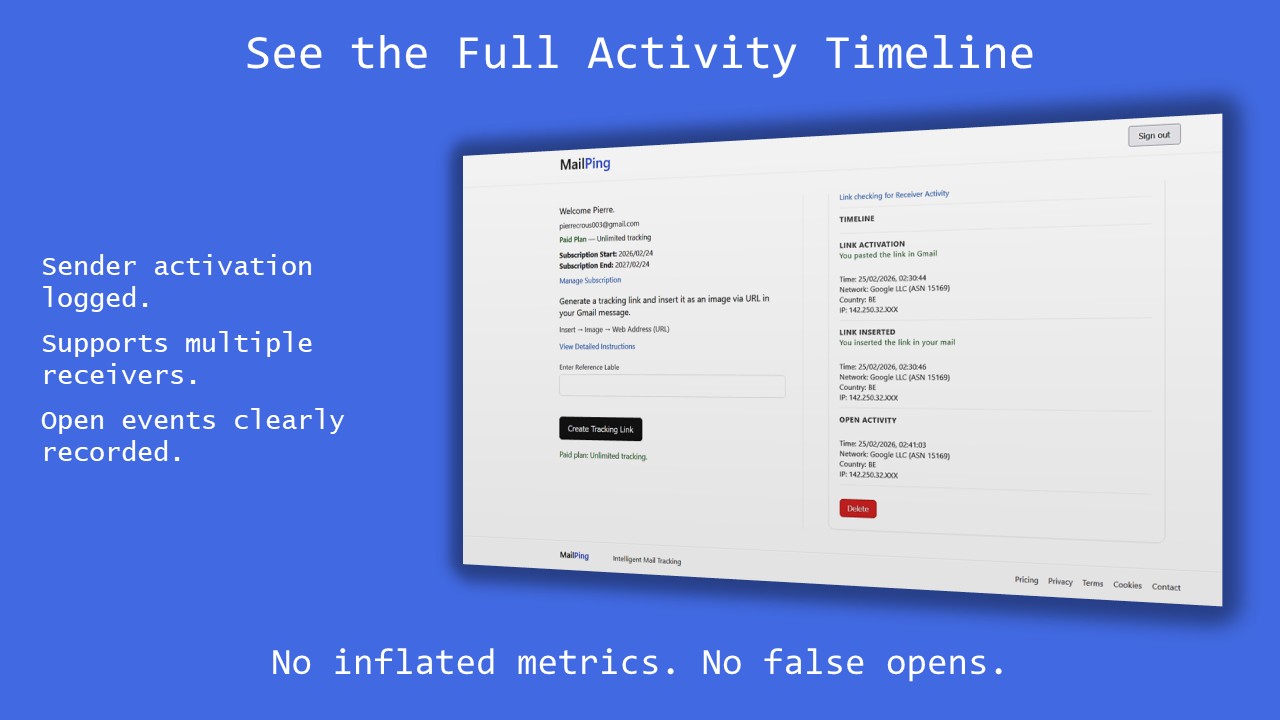
- Check your dashboard for the first confirmed open timestamp.
Email tracking works by embedding a unique image inside the email. When the recipient opens the message and images load, the tracking system records the first confirmed open event.
The reliability of confirmation depends not only on the tracking method but also on the sending environment. If you are sending from your own domain address, shifting the sending environment while preserving your professional identity can improve consistency.
See how to track email from your own domain and the full guide on sending from your domain using Gmail alias.
Does This Work for Personal Gmail Accounts?
Yes. Unlike built-in read receipts (see Gmail read receipt limitations), image-based tracking works with personal @gmail.com accounts.
If you are wondering whether Gmail supports tracking, the answer is yes — but not natively. Tracking relies on image loading behavior rather than Gmail’s internal systems.
This article focuses on the practical setup. For a broader explanation of Gmail tracking limitations, see can you track emails in Gmail.
How Accurate Is Gmail Email Tracking?
Email tracking detects when images load inside a message. Technical factors such as Gmail’s image proxy caching can influence how signals appear.
Tracking accuracy depends on how Gmail loads images through its proxy infrastructure. For deeper explanations see how accurate Gmail email tracking is and how Gmail image proxy affects tracking.
Well-designed tracking systems focus on identifying the first confirmed open event rather than counting repeated image loads.
Do You Need a Browser Extension?
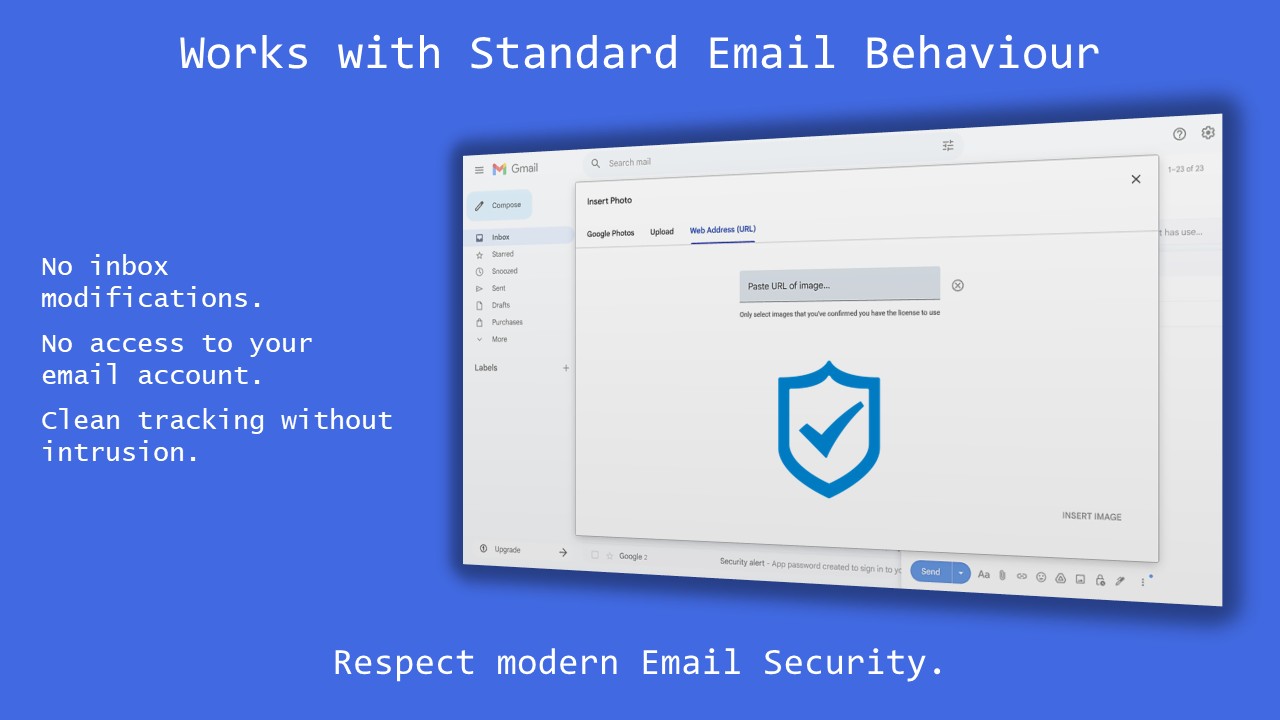
No. You can track Gmail emails without installing browser extensions. Image-based tracking works directly inside Gmail web.
Learn more about tracking Gmail without extensions if you prefer not to install plugins.
Is Email Tracking Legal?
Email tracking legality depends on your jurisdiction and how data is handled. Disclosure and privacy laws vary by region. For more detail, see is email tracking legal in Gmail.
How MailPing Tracks Gmail Emails
MailPing generates a unique tracking image that you insert using: Insert → Image → Web Address (URL)
This approach confirms open activity based on email rendering behavior rather than recipient approval.
When the recipient opens the email and images load, MailPing records the first confirmed open timestamp inside your dashboard. MailPing focuses on clarity. It records the first confirmed open event and does not inflate repeated activity.