Does Gmail Cache Images?
Last updated:
Short Answer: Gmail may cache images retrieved through its proxy servers, which can influence how repeated image loads appear in email tracking systems.
Quick Answer
Yes, Gmail may cache images retrieved through its proxy servers.
When Gmail loads images contained in an email, the images may be retrieved through Google proxy infrastructure and temporarily cached.
This means:
- The first image load may generate a request to the image server.
- Gmail may store a cached version of the image.
- Subsequent views of the same message may load images from cache.
Quick Summary:
- Gmail retrieves images through proxy servers.
- Images may be cached after retrieval.
- Cached images can influence tracking patterns.
- Proxy caching improves performance and security.
Yes. Gmail often caches images through its proxy infrastructure before delivering emails to recipients. This architecture improves security and performance but also influences how email tracking signals appear.
When Gmail loads images inside an email, those images are often retrieved through Google-controlled proxy servers. In many cases Gmail stores a cached version of the image, which can change how repeated image loads behave.
Understanding Gmail image caching is important when interpreting Gmail email tracking data.
Why Gmail Caches Images
Gmail introduced proxy-based image retrieval to improve user privacy, security, and performance.
Instead of loading images directly from the sender’s server, Gmail retrieves images through Google infrastructure. This prevents senders from directly accessing the recipient’s IP address.
You can learn more about Gmail image infrastructure in how Gmail loads images.
You can also see why tracking signals sometimes appear to originate from Google infrastructure in why Gmail opens appear from Google IP addresses.
How Gmail Image Caching Works
When Gmail loads an image contained in an email, the request typically follows this path:
- The recipient opens the email.
- Gmail retrieves external images through proxy servers.
- The image may be temporarily cached.
- Subsequent loads may retrieve the cached image.
This architecture improves performance and allows Gmail to scan images for security risks.
For a deeper explanation of Gmail proxy architecture see how Gmail’s image proxy affects email tracking.
How Image Caching Affects Email Tracking
Because Gmail may cache images, tracking signals sometimes behave differently compared to direct image loading systems.
For example:
- The first open may generate the tracking image request.
- Later views may load the cached version.
- Multiple devices may trigger additional loads.
This behavior is one reason tracking signals may appear inconsistent in some analytics systems.
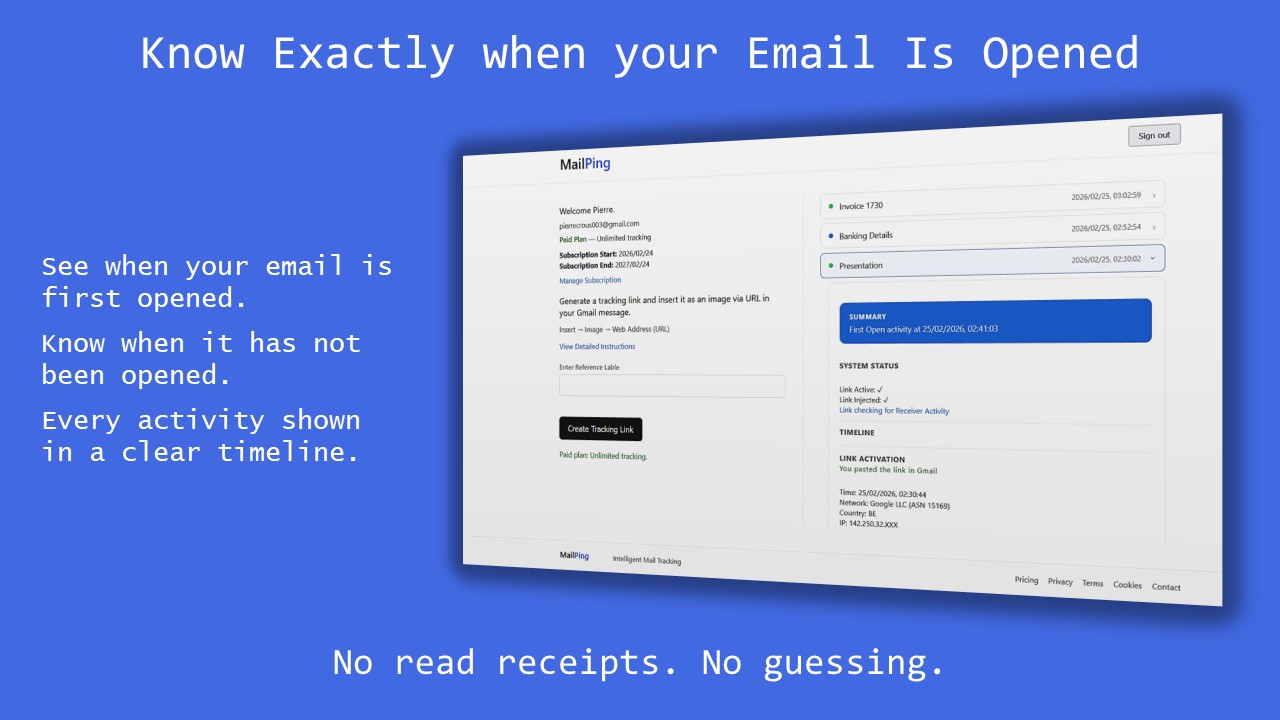
However, caching does not explain when the first image request occurs. In the Email Client Protocol Study – Gmail vs Apple vs Outlook , MailPing observed that Gmail can generate a proxy-based image request before user interaction, while Apple Mail generates proxy requests only at open and Outlook loads images directly from the recipient device at open. This means the first tracking signal may occur before an email is opened, while caching primarily affects what happens afterward.
MailPing deliverability research shows that caching alone does not determine how tracking signals behave. Instead, signal accuracy and classification outcomes are shaped by how tracking pixels are implemented at the HTTP level, including cache-control strategy, request behavior, and domain alignment. See Email Tracking Pixel Implementation Study.
To understand how Gmail tracking signals should be interpreted, see Gmail open tracking accuracy.
Does Gmail Cache Tracking Pixels?
Yes. Tracking pixels are simply images embedded inside emails. Because Gmail retrieves images through proxy infrastructure, tracking pixels may also be cached.
This does not prevent tracking from working. Instead, it changes how repeated image loads appear in analytics systems.
A complete overview of Gmail tracking infrastructure is available in the Gmail email tracking guide, which explains how tracking pixels, Gmail proxy servers, and caching behavior interact.
Understanding Gmail Tracking Signals
Modern email tracking systems must interpret image loading behavior carefully.
Tracking signals confirm that email content was rendered somewhere in the delivery chain, but they do not always represent direct user interaction.
Understanding Gmail proxy infrastructure helps prevent misinterpretation of tracking events.
Frequently Asked Questions
Does Gmail cache images?
Yes. Gmail may cache images retrieved through its proxy servers after the first load, which can influence how repeated image requests appear in email tracking systems.
Why does Gmail cache email images?
Gmail caches images to improve performance, security, and privacy by retrieving images through Google proxy infrastructure rather than loading them directly from sender servers.
Do cached images affect email tracking?
Yes. Because Gmail may serve cached images after the first load, repeated views of an email may not always trigger new tracking pixel requests.
See MailPing in Action