Gmail Open Tracking Accuracy Explained
Last updated:
Short Answer: Gmail email tracking detects when images inside an email are loaded. Accuracy depends on technical factors such as Gmail’s image proxy caching, device switching, forwarding, and whether images are enabled.
Quick Summary:
- Tracking detects image loading.
- Gmail uses proxy servers and caching.
- Forwarding and device changes may influence results.
- Reliable systems focus on the first confirmed open event.
Gmail open tracking detects when images inside an email are loaded. While Gmail’s proxy caching and device behavior can influence how signals appear, meaningful confirmation is based on whether the tracking image is requested when the message is opened.
For a complete overview of Gmail tracking systems and infrastructure, see the Gmail email tracking guide.
If you're deciding between read receipts, tracking extensions, and image-based tracking, see best Gmail email tracking methods for a full comparison of reliability across different approaches.
Definition: Gmail open tracking accuracy refers to how reliably a tracking system can detect and interpret image loading events when an email is opened.
If you're looking for a simplified overview instead of a technical deep dive, see how accurate Gmail email tracking is for a clearer real-world summary.
How Gmail Email Tracking Works
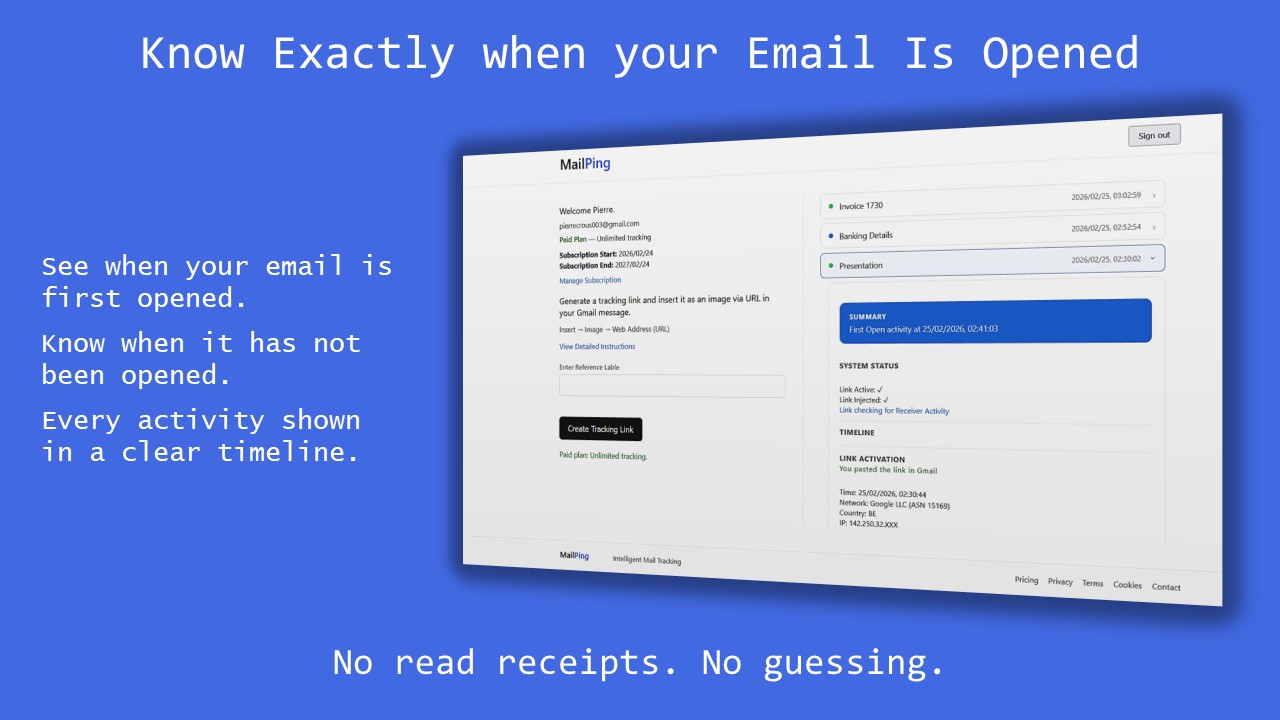
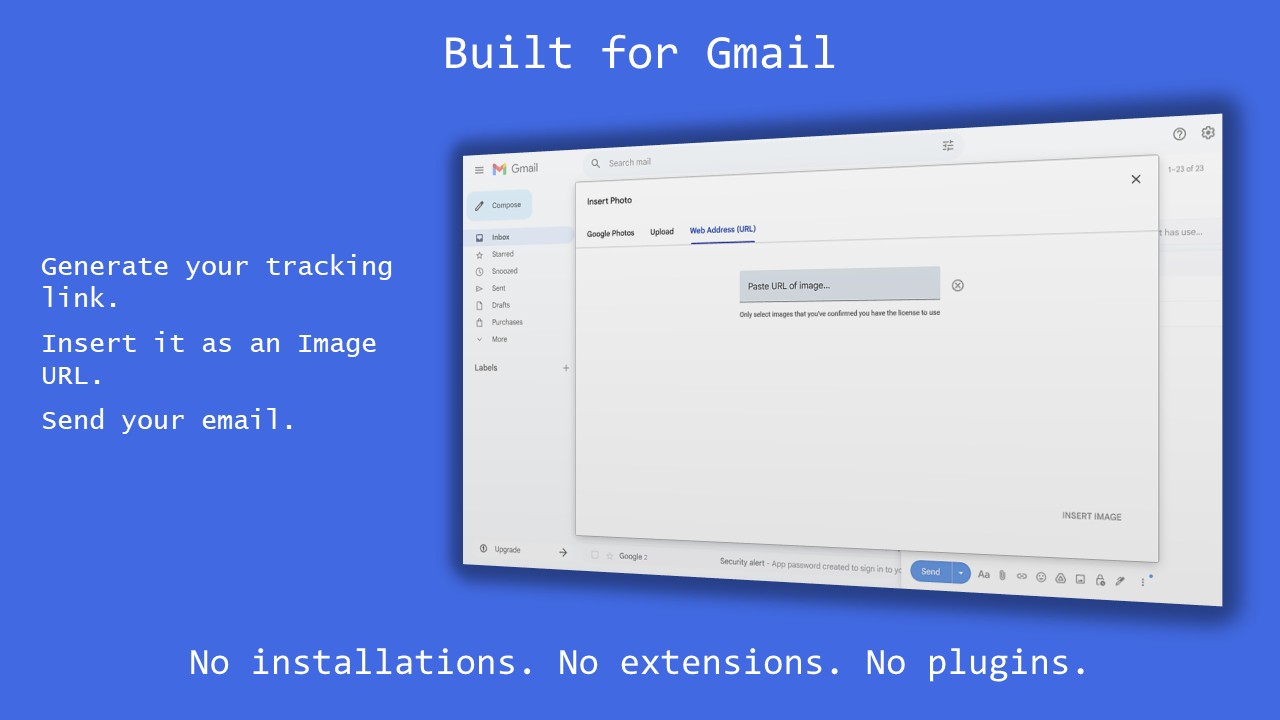
Email tracking works by embedding a unique image inside your message. When the recipient opens the email and images load, the tracking system records that event.
This process does not rely on Gmail’s internal systems. Instead, it depends on whether the email client loads external images.
Tracking detects image loading — not reading behavior. It confirms that the message was opened in an environment where images were enabled.
Learn more about how Gmail tracking works and see how to track emails in Gmail step-by-step for a complete practical setup guide.
What Affects Tracking Accuracy?
1. Gmail Image Proxy Caching
Gmail retrieves images through proxy servers before delivering them to recipients. This may cause tracking signals to appear differently than direct device-based image requests.
If you want a deeper explanation of Gmail’s image loading infrastructure, see how Gmail loads images. You may also want to review when Gmail loads images automatically and why Gmail blocks images.
To understand how Gmail’s proxy system interacts with tracking signals in more detail, see whether Gmail blocks email tracking and how proxy behavior affects detection.
Proxy retrieval can sometimes occur before the user fully interacts with the message. However, meaningful open confirmation is still based on image load behavior.
This timing difference has been confirmed through controlled testing. In the
Email Client Protocol Study – Gmail vs Apple vs Outlook
,
MailPing observed that Gmail generates a proxy-based image request before user interaction, while Apple Mail generates proxy requests only at open and Outlook loads images directly from the recipient device at open. This distinction is central to understanding Gmail tracking accuracy, as some signals may occur before a user actually opens the message.
However, the issue is not that tracking data is unreliable — it is that different email clients generate different types of signals that must be interpreted correctly. A deeper explanation of this can be found in
The Email Tracking Problem Isn’t the Data — It’s the Interpretation
,
which explains how Gmail, Apple Mail, and Outlook each produce fundamentally different tracking behaviors.
MailPing deliverability research further shows that these differences in signal behavior are not caused by tracking itself, but by how tracking pixels are implemented at the HTTP level. Cache-control configuration, request structure, and domain alignment determine how signals are generated, interpreted, and classified. See Email Tracking Pixel Implementation Study.
For deeper context, see how Gmail image proxy affects tracking.
2. Image Blocking
If a recipient disables image loading in their email client, tracking cannot detect the open. In this case, no image request is made, and no confirmation signal is generated.
This creates what is known as a false negative — the message may have been read, but tracking cannot confirm it.
3. Forwarding
If an email is forwarded, additional image loads may occur when new recipients open the message. Tracking systems may record these as separate image events.
4. Multiple Devices
Opening the same email on multiple devices (for example, mobile and desktop) may generate multiple image requests.
Well-designed tracking systems focus on the first confirmed open rather than counting every repeated signal.
5. False Positives vs False Negatives
No tracking system is perfect. Accuracy must be understood in terms of probabilities.
- False negative: The email was opened but images were disabled.
- False positive: An automated image load occurs without meaningful human interaction.
Understanding this balance helps set realistic expectations for Gmail tracking accuracy.
Should You Count Multiple Opens?
Some tracking systems count every image load. Others focus only on the first confirmed open event.
Repeated image loads can occur due to:
- Opening the email multiple times
- Viewing on multiple devices
- Forwarding to other recipients
- Image reloading behavior
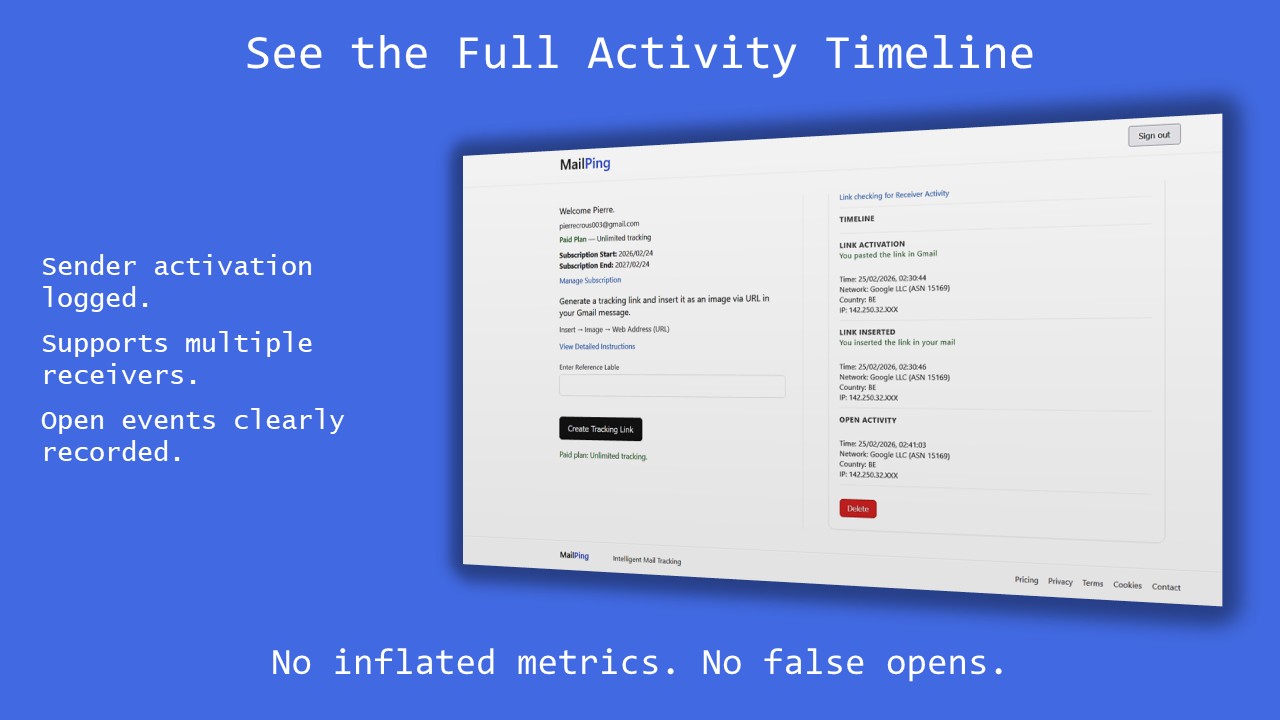
When determining whether someone read your Gmail, the first confirmed open is typically the most meaningful signal. Counting every reload can inflate perceived engagement.
How MailPing Handles Accuracy
MailPing focuses on identifying the first confirmed open timestamp rather than inflating repeated signals.
Unlike built-in read receipts (see Gmail read receipt limitations), tracking works independently of Workspace features.
What Gmail Tracking Cannot Measure
Email tracking confirms image loading. It does not measure:
- How long the email was read
- Whether the recipient carefully reviewed the content
- Whether attachments were opened
- Emotional reaction or engagement
Tracking provides confirmation of access, not comprehension. Understanding this distinction prevents unrealistic expectations.
Tracking works across devices, including smartphones and tablets. Learn more about how to track Gmail emails on mobile and how device switching can influence tracking signals.
Track the first real open — no fake signals, no inflated metrics.
Start Tracking FreeFrequently Asked Questions
How accurate is Gmail email tracking?
Tracking detects when images are loaded inside an email. Accuracy depends on image loading behavior, Gmail’s proxy caching, forwarding, device usage, and whether images are enabled.
Does Gmail image caching affect tracking?
Yes. Gmail uses proxy servers that may cache images before delivering them to recipients, which can influence how and when tracking signals appear.
Can Gmail tracking detect multiple opens?
Yes, but many systems focus on the first confirmed open event.
See MailPing in Action