Best Gmail Email Tracking Methods (Compared)
Last updated:
Short Answer: The most consistent way to track Gmail emails is image-based tracking. Built-in read receipts are limited, and browser extensions depend on environment compatibility.
Quick Summary:
- Personal Gmail has no built-in read receipts.
- Workspace receipts are optional and limited.
- Extensions depend on browser permissions.
- Image-based tracking works across platforms.
Overview
There are three main ways people attempt to track Gmail emails: built-in read receipts, browser extensions, and image-based tracking.
For a complete overview of Gmail tracking systems and how they interact with Gmail infrastructure, see the Gmail email tracking guide.
1. Gmail Read Receipts (Workspace Only)
Personal Gmail accounts do not include read receipts (see does Gmail have read receipts).
Google Workspace accounts may allow receipt requests, but:
- They must be enabled by an administrator.
- Recipients can decline them.
- They are not guaranteed.
Learn more about how to turn on read receipts in Gmail.
2. Browser Extensions
Tracking extensions integrate with your browser and Gmail interface.
However:
- They require installation.
- They may not work across devices.
- They depend on browser permissions.
Some users prefer not to rely on extensions. See tracking Gmail without extensions for alternatives.
3. Image-Based Tracking
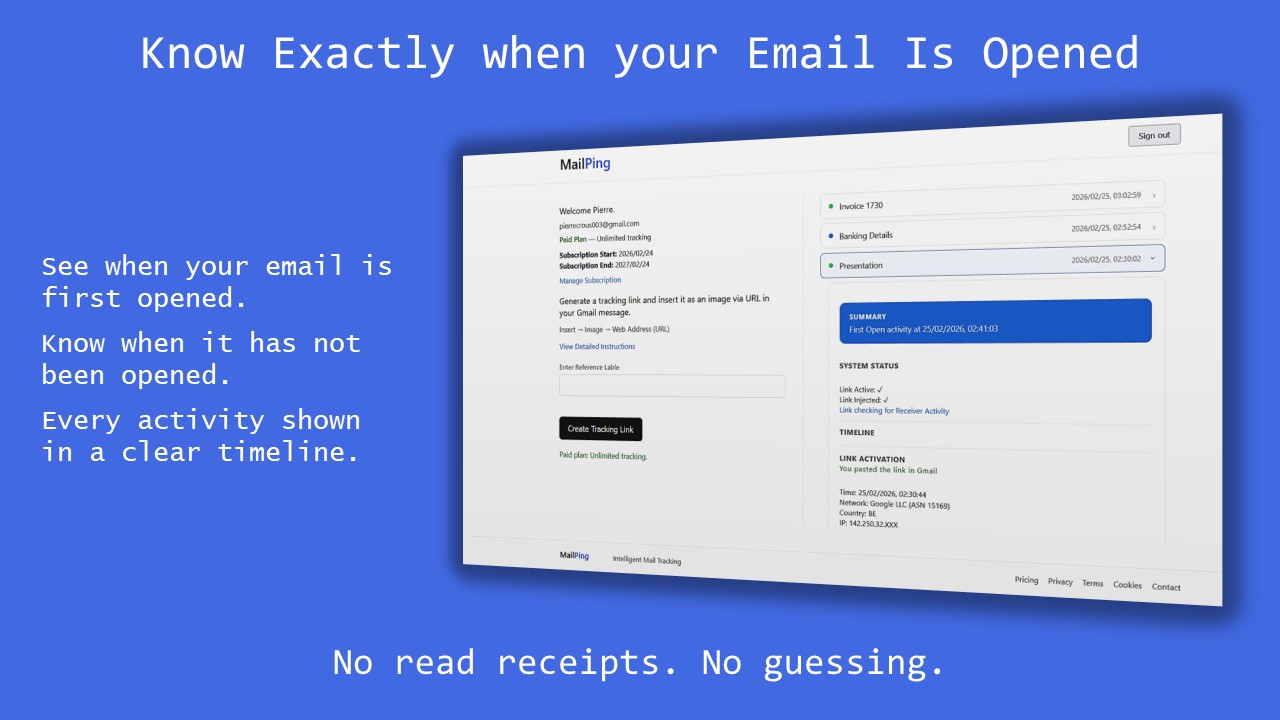
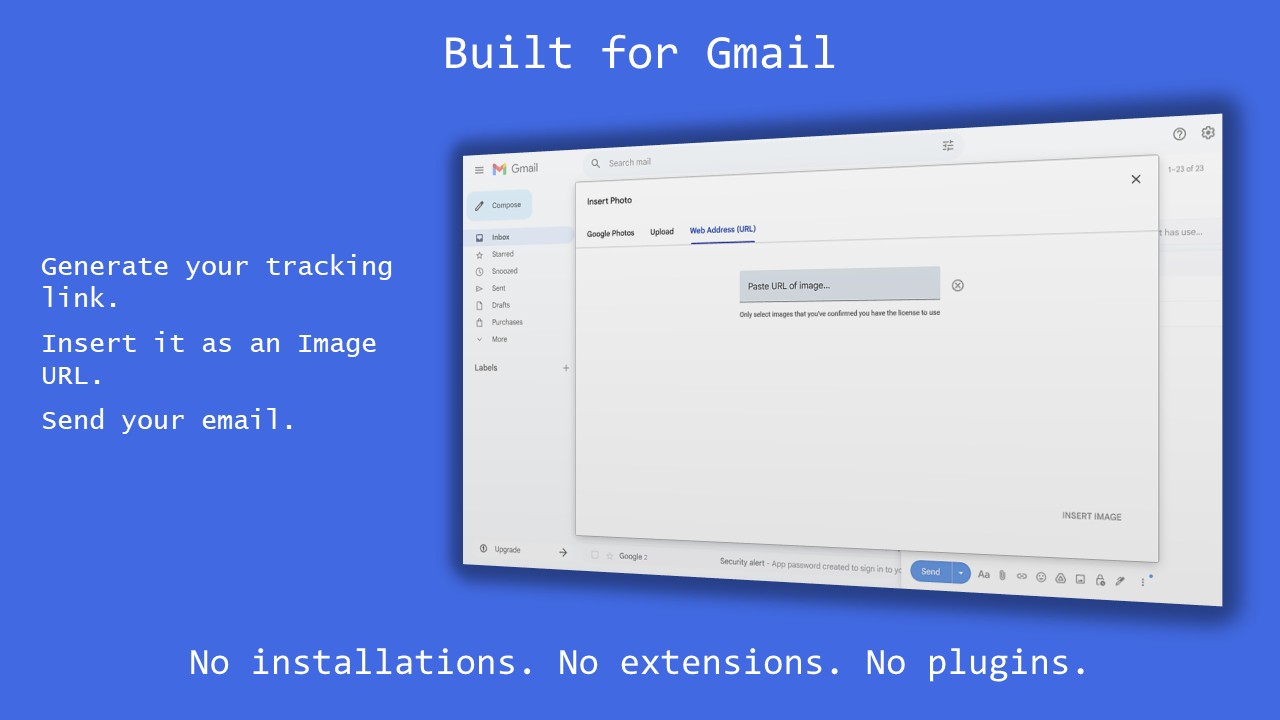
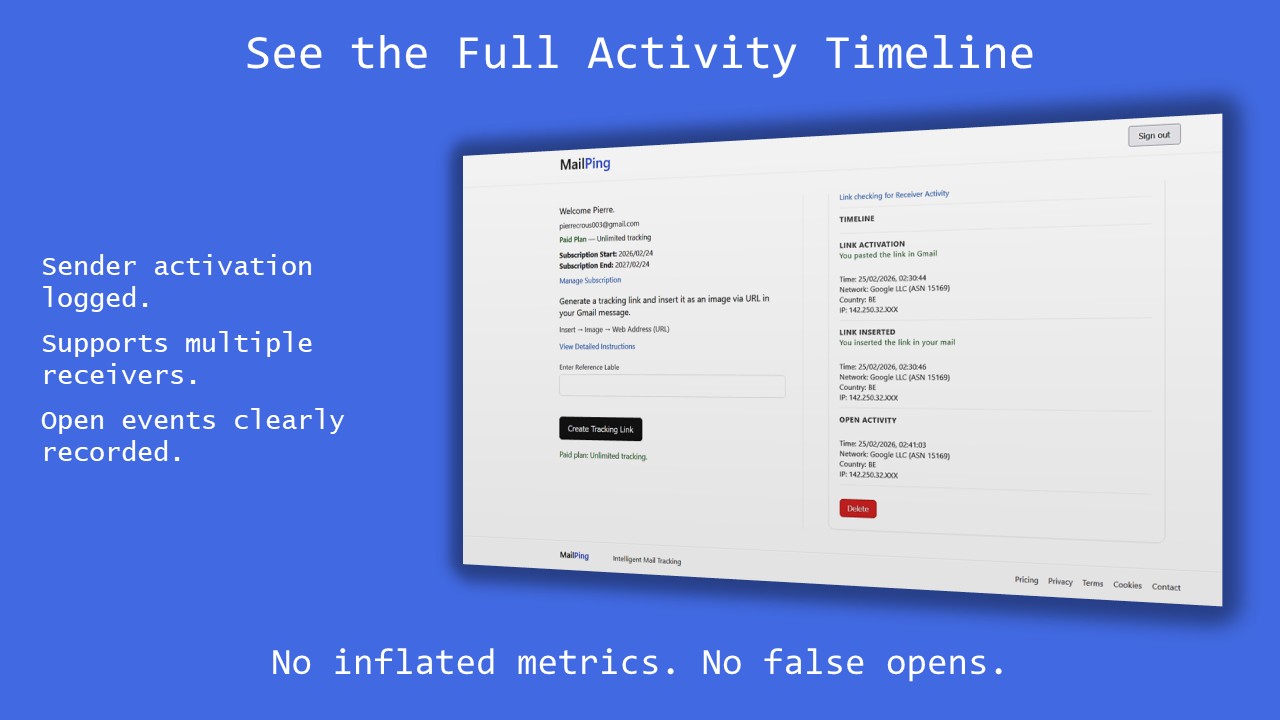
Definition: Image-based tracking embeds a unique image in an email. When the image loads, the server records the request.
This method:
- Works in personal Gmail accounts.
- Does not require Workspace.
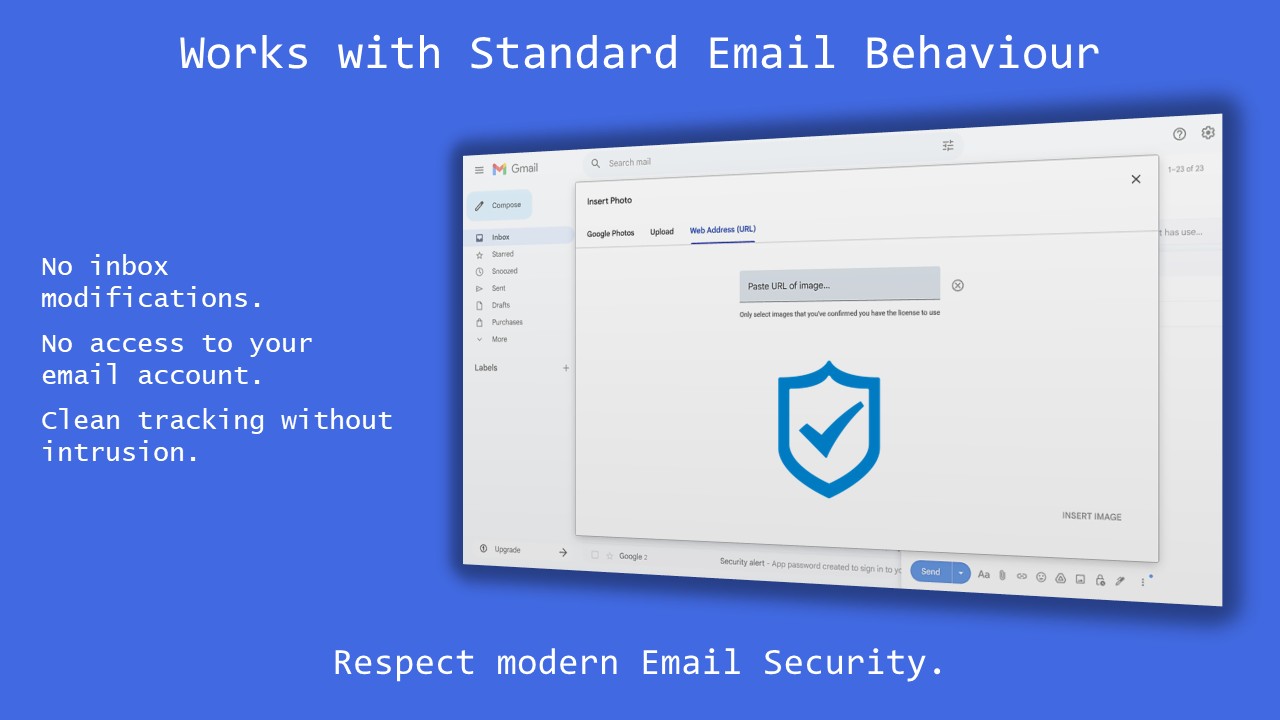
- Does not require browser plugins.
- Works across desktop and mobile devices.
It can also be used when sending from your own domain address by configuring Gmail “Send mail as.” This allows you to preserve your professional identity while using a unified web-based sending environment.
See how to track emails in Gmail step-by-step and how to track email from your own domain for implementation details.
How Gmail Infrastructure Affects Tracking
Gmail routes images through proxy servers (see does Gmail block email tracking and how Gmail image proxy affects tracking).
This does not eliminate tracking but influences how signals appear.
However, the key factor is not the tracking method itself — it is how the resulting signals are interpreted. A deeper explanation of this can be found in The Email Tracking Problem Isn’t the Data — It’s the Interpretation , which explains how Gmail, Apple Mail, and Outlook generate fundamentally different tracking behaviors.
For accuracy details, review Gmail tracking accuracy explained and how accurate Gmail email tracking is.
Which Method Is Best?
- If you rely on built-in features → Workspace receipts are limited.
- If you prefer browser integration → Extensions may work.
- If you want cross-platform compatibility → Image-based tracking is more universal.
However, the sending environment matters just as much as the tracking method.
If you are sending from your own domain address (for example, [email protected]), built-in client behavior may introduce variability. In that case, shifting the sending environment while keeping your domain identity can improve confirmation consistency.
See how to track email from your own domain and the full guide on sending from your domain using Gmail alias.
If you compare platforms directly, review Gmail vs Outlook read receipts for environment differences.
Tracking also differs from whether Gmail notifies users (see can you track emails without the recipient knowing).
Track the first real open — no fake signals, no inflated metrics.
Start Tracking FreeFrequently Asked Questions
What is the best way to track emails in Gmail?
Image-based tracking works across personal Gmail accounts without relying on Workspace or browser extensions.
Are Gmail read receipts reliable?
No. They are optional and limited to certain Workspace accounts.
Do tracking extensions work better?
Extensions depend on browser compatibility and may not function consistently across devices.
See MailPing in Action